

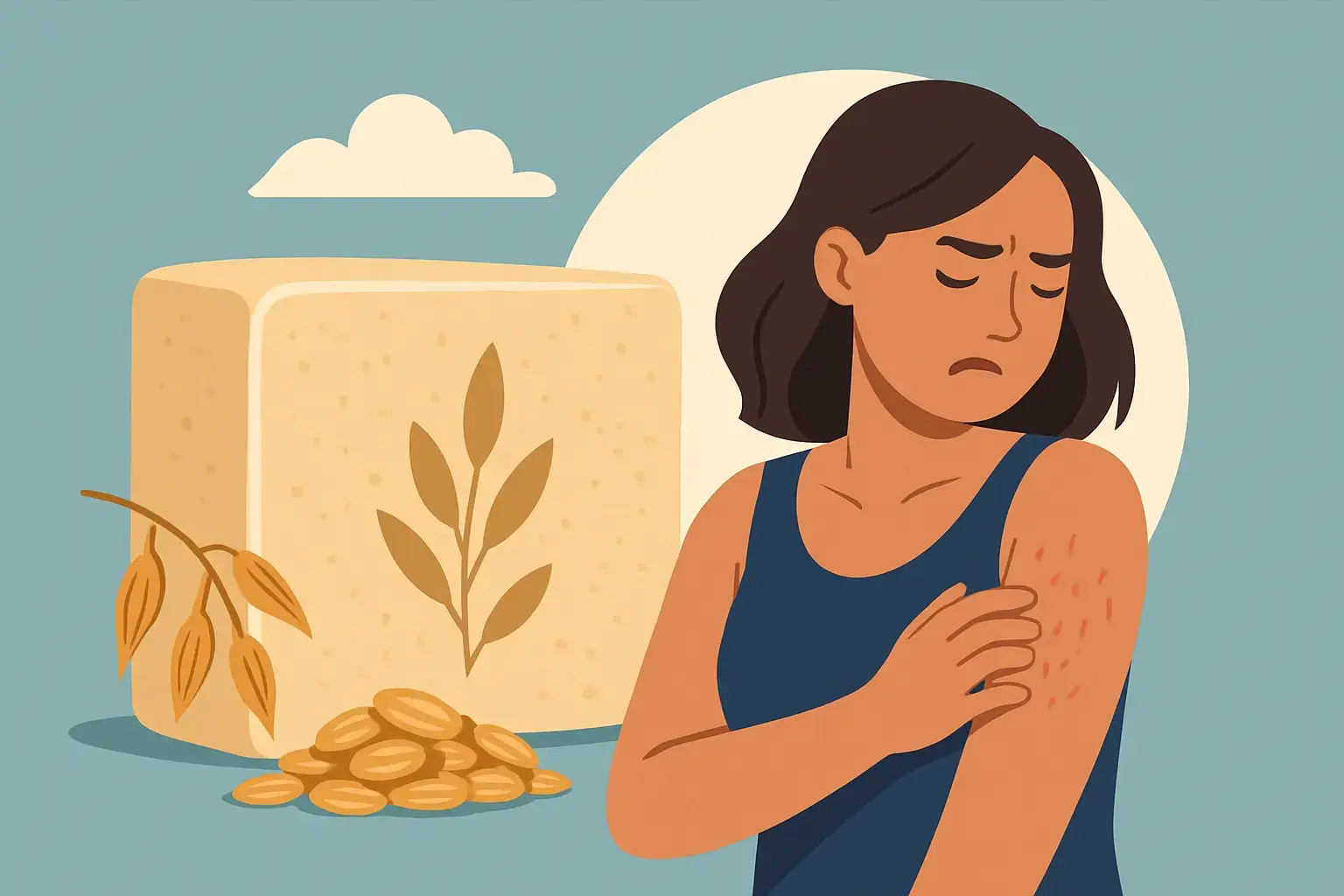
It starts the same way for a lot of people – a shower meant to feel refreshing turns into a scratchy, tight, hot feeling that lingers all day. You switch body wash, you turn the water cooler, you moisturise more. Sometimes the problem is not your skin at all. It is the cleanser.
When skin is itchy, it is usually asking for one thing: less disruption. That is why oatmeal soap for itchy skin has earned its place in so many bathrooms. Oats are not flashy, but they are quietly effective when dryness, sensitivity, or eczema-prone skin makes everything feel like “too much”.
Why itchy skin flares after cleansing
Cleansing should remove sweat, daily grime, and deodorant residue. The trouble is that many modern cleansers do far more than that. High-foaming surfactants can strip the skin’s surface lipids. Hot water adds to the loss. Fragrance, essential oils, and harsh preservatives can tip reactive skin over the edge.
Once the barrier is compromised, water escapes faster and irritants get in easier. That is when itch arrives – sometimes with redness, rough patches, or that tight “squeaky clean” sensation that is anything but clean-feeling.
Itchy skin is also not one single condition. For some it is simple dryness. For others it is eczema, contact dermatitis, or a reaction to a specific ingredient. The goal is the same: cleanse without picking a fight with your barrier.
What oatmeal actually does for the skin
Oats have a long history in skin comfort for a reason. Colloidal oatmeal is finely milled oat that disperses in water and leaves a soft, cushioning feel on the skin. It is valued for calming the look and feel of irritation, and for helping skin hold onto moisture.
Oats contain beta-glucans and starches that give that soothing, “coated” sensation many people love. They also contain compounds called avenanthramides, which are associated with reduced visible redness and a calmer feel.
In soap, oats can play two roles. First, as a soothing ingredient that supports comfort during and after washing. Second, as a gentle texture – but this is where formulation matters, because texture can be either calming or scratchy.
Oatmeal soap for itchy skin: what matters in the formula
Not all oatmeal soaps feel the same on reactive skin. If you are choosing a bar specifically because you itch, look beyond the word “oatmeal” on the label.
Colloidal oats vs rolled oats
Colloidal oatmeal is milled very finely. That is what most people with sensitive skin are hoping for, because it rinses cleanly and feels smooth.
Whole or rolled oats can be lovely in a scrub bar, but they can be too abrasive when the skin is already inflamed, broken, or eczema-prone. If you scratch easily or you get sore patches, a smoother bar is usually a better bet.
Fragrance and essential oils
A common trap: buying an “oatmeal” bar that is heavily scented. If your skin is itchy, fragrance can be a frequent trigger, even when it smells natural. It is not about fear-mongering. It is about reducing variables when your skin is clearly asking for simpler.
If you love scent, keep it for times when your skin is calm. When you are actively flaring, choose fragrance-free or very lightly scented.
The cleansing base: soap is not just soap
A bar can contain oats and still be drying if the base oils are not chosen with the skin barrier in mind. A well-formulated bar should cleanse without leaving you feeling tight.
This is where traditional fats matter. Skin-compatible lipids help the bar feel conditioning and reduce that post-shower itch. Many people with dry, sensitive skin find that a tallow-based soap feels noticeably more comfortable than a detergent-based wash because it supports that “clean but cushioned” finish.
Superfat and cure time
In cold-process soap, “superfat” refers to leaving a small portion of oils unsaponified. Done well, it can make a bar feel more conditioning. Cure time also matters. A properly cured bar is firmer, longer-lasting, and often feels gentler in use because excess water has evaporated and the soap has stabilised.
How to use oatmeal soap so it actually helps
If your skin is itchy, technique can make as much difference as product.
Start with lukewarm water. Hot water feels comforting in the moment, but it can intensify dryness and itch afterwards.
Lather the bar in your hands or on a soft cloth rather than rubbing it directly on sore patches. Let the lather do the cleansing. Think glide, not scrub.
Rinse thoroughly, then pat dry. Rubbing with a towel can irritate already sensitised skin.
Moisturise while skin is still slightly damp. If you are prone to eczema or winter dryness, this one step can change everything. The cleanser reduces disruption, and moisturiser seals in water.
When oatmeal soap is a great choice – and when it depends
Oatmeal soap for itchy skin is often an excellent everyday option when itch is driven by dryness, mild sensitivity, or seasonal changes. It is also a good “reset” bar when you are simplifying your routine.
That said, there are situations where it depends.
If your itch is caused by a specific allergy (for example, fragrance, certain botanicals, or even oats themselves), oatmeal will not be the hero ingredient. If you have hives, swelling, or a rapid reaction, stop using the product and seek medical advice.
If your skin is cracked, weeping, or actively infected, focus on gentle cleansing and follow clinical guidance. Soap can sting on broken skin, even when it is well made.
If your itch is on the scalp or in intimate areas, be cautious with true soap. These areas can be more pH-sensitive. A different kind of cleanser may be more appropriate.
What to look for on the ingredient list
You do not need a chemistry degree. You just need a few simple signals.
Look for a short list you recognise, and oats listed clearly as colloidal oatmeal, oatmeal, or Avena sativa (oat) kernel flour. If you are reactive, look for minimal fragrance and minimal extras.
If the bar includes clays, strong essential oils, or heavy exfoliants, consider whether that matches your current skin reality. “Deep cleansing” and “tingly” are usually not the goal when you are itchy.
If you are trying to reduce plastic in the bathroom, a properly formulated bar can also be one of the easiest swaps that does not feel like a compromise.
Why the fat matters: barrier support in real life
People often focus on the soothing ingredient – the oats – and forget the base. But the base is what touches your skin every day.
Traditional tallow soap is having a quiet comeback because it is practical. Tallow is rich in skin-friendly fatty acids and naturally contains vitamins A, D, E, K, and B12. In a well-made bar, it can feel creamy and conditioning, especially for people who describe their skin as “tight” after washing.
That does not mean everyone needs tallow. Some people prefer plant-only formulas, and some skin types do well with them. The point is to choose a base that leaves your skin feeling comfortable, not stripped.
If you are exploring artisan bars, it is worth buying from a maker who is transparent about ingredients, cure time, and sourcing. That transparency tends to track with gentler, more considered formulations.
(If you want to see how a small-batch maker approaches this, Luna Natural Soap Co. shares its ingredient philosophy and traditional process at https://Www.lunasoap.ie.)
Common mistakes that keep itch going
One mistake is over-cleansing. If you are showering once a day and still feel itchy, try cleansing the whole body with soap every other day, and just rinse the rest. You can still wash underarms and feet daily.
Another is using an exfoliating oatmeal bar on already irritated skin. Oats can soothe, but texture can irritate if you are in a flare.
Finally, be wary of the “more actives” approach. Acids, strong fragrance blends, and intensive scrubs can be great for resilient skin. Itchy, reactive skin usually wants fewer steps, not better marketing.
A calm routine that supports an itchy skin reset
If you are trying to get ahead of itch, keep the routine boring for two weeks. Choose a gentle oatmeal bar, keep showers short and lukewarm, and moisturise consistently. Use fragrance-free laundry detergent if you suspect fabric irritation. Avoid experimenting with multiple new products at once.
Skin often settles when you stop changing the goalposts.
A helpful closing thought: if you find a bar that leaves your skin feeling quietly comfortable – no tightness, no squeak, no urge to scratch – let that be the standard. The best soap for itchy skin is the one you can use every day without thinking about your skin at all.