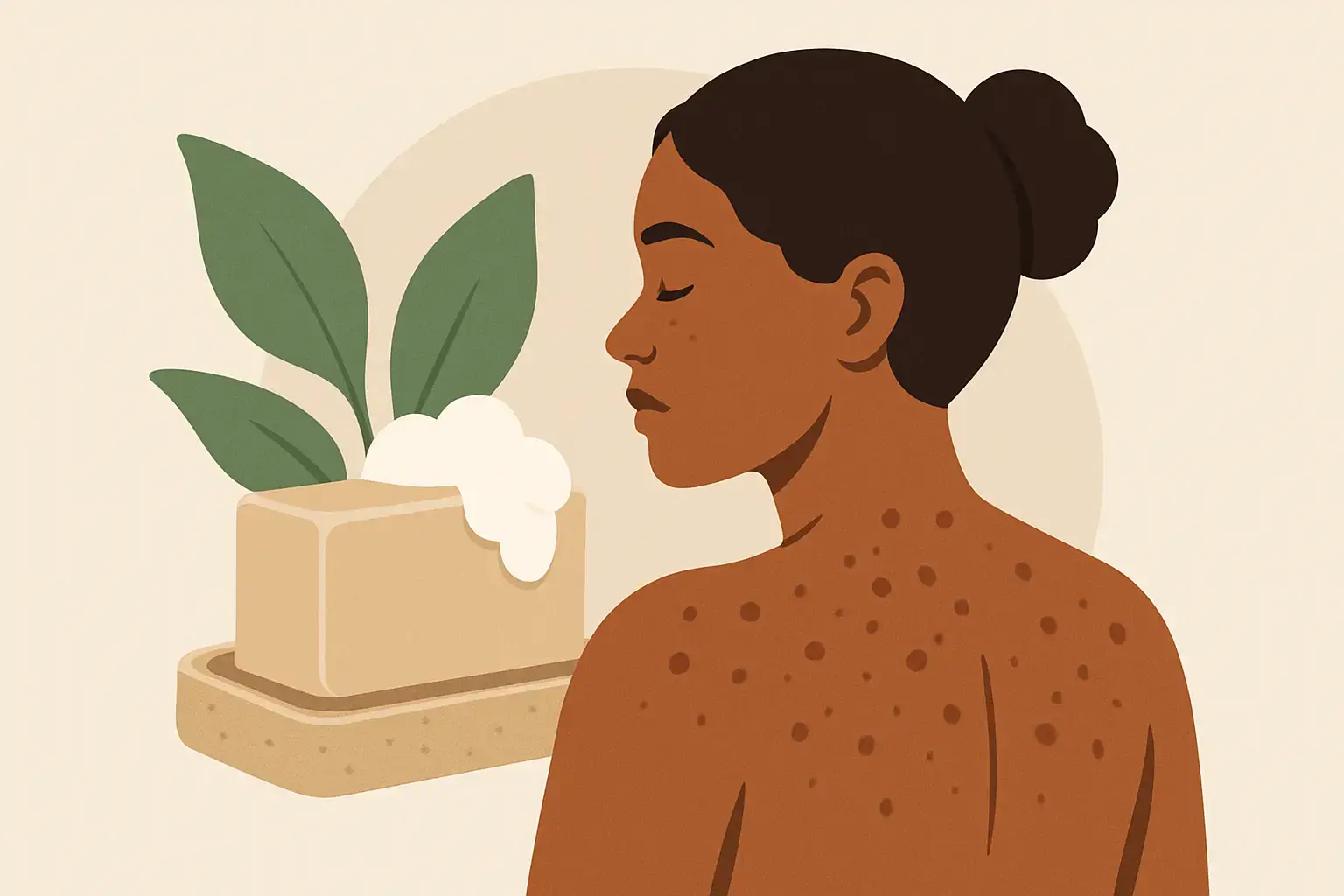


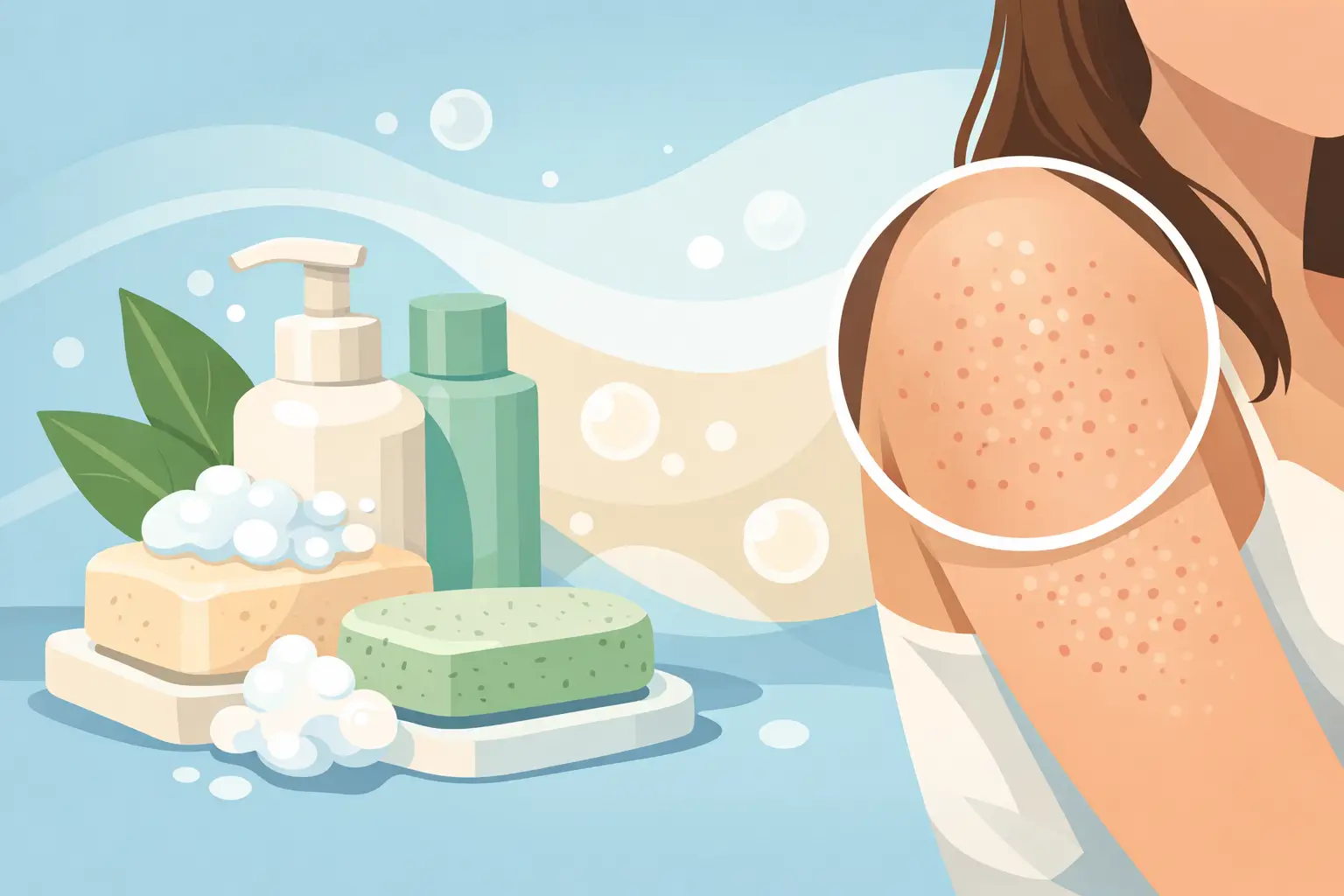
Those tiny rough bumps on the backs of the arms, thighs or bottom can make skin feel permanently unfinished – not sore enough to seem urgent, but never quite calm either. If that sounds familiar, the soap you use matters more than most people realise.
Keratosis pilaris is often made worse by cleansing that strips the skin, leaves it tight, or adds extra irritation to an already stubborn patch of dryness. A harsher wash will not scrub it away. More often, it keeps the cycle going.
What keratosis pilaris actually needs from a cleanser
Keratosis pilaris happens when keratin builds up and plugs the hair follicles, creating those small, rough bumps. It is common, harmless, and often linked with dry or sensitive skin. That last part is where cleansing becomes important.
Skin with keratosis pilaris usually does best with a soap that cleans properly without over-drying. That may sound simple, but many body washes and bars are built around strong detergents, heavy fragrance, or aggressive exfoliating claims. For some people, that leaves the skin feeling squeaky clean. In practice, squeaky often means stripped.
When the skin barrier is already under strain, harsh cleansing can increase roughness, redness and discomfort. A better approach is to use a bar that supports the skin first, then let the rest of your routine do the heavier work of softening and smoothing.
How to choose soap for keratosis pilaris
The best soap for keratosis pilaris is usually a gentle one. Not the most heavily scented. Not the most exfoliating. Not the one promising instant results.
Look for a bar that leaves skin comfortable after washing rather than tight. Rich, traditional soaps made with nourishing fats can be a better fit than highly processed cleansers with a long list of foaming agents. For dry, reactive skin, simplicity often wins.
Ingredients that support moisture are especially useful. Tallow is a strong example because it is naturally rich in skin-compatible fats and vitamins A, D, E and K. In a well-made bar, it creates a creamy lather that cleanses without the thin, stripped feeling many people get from detergent-led formulas. That matters for keratosis pilaris because calmer skin is often smoother skin over time.
Oatmeal can also be helpful, especially where bumps come with itching or visible dryness. It brings a gentle soothing quality and a soft texture without turning the wash into a harsh scrub. For some people, that is exactly the balance they need.
If your skin is very reactive, it is worth being cautious with strong essential oils, synthetic fragrance, or bars marketed as deeply cleansing. Those can be enjoyable on resilient skin, but keratosis pilaris often sits alongside sensitivity. What feels luxurious to one person may feel irritating to another.
Should soap for keratosis pilaris exfoliate?
Sometimes, but not always.
Exfoliation can help loosen the rough build-up that makes keratosis pilaris feel bumpy. The problem is that many people overdo it. They use an acid product, then a scrub, then a rough mitt, then a drying wash, and wonder why the skin looks angrier than before.
If your bumps are thick and persistent, a little exfoliation may help. But your cleanser does not need to do everything. In fact, a plain, nourishing soap is often the smarter foundation, especially if you already use a body lotion with lactic acid, salicylic acid, or urea.
That is the trade-off. If your routine already includes active ingredients after bathing, your soap should probably be gentle and supportive. If you do not use any leave-on treatment and your skin is not especially sensitive, a mildly textured bar such as an oatmeal soap may suit you well. The goal is steady improvement, not a dramatic scrub session once a week.
What to avoid if you have keratosis pilaris
The wrong cleanser does not cause keratosis pilaris, but it can make it look and feel worse.
Very foamy body washes can be drying, especially if they rely on stronger surfactants. Heavy perfume can be another problem, particularly on upper arms and thighs where skin is already rough and a bit inflamed. Some exfoliating bars are also too abrasive for regular use, leaving micro-irritation behind.
Watch how your skin feels after washing. If it stings when you apply moisturiser, feels papery an hour later, or looks redder after every shower, your cleanser may be part of the issue. A good soap for keratosis pilaris should leave skin clean, soft and settled.
Why traditional soap can work well for rough, dry skin
There is a reason traditionally made bars still have loyal users. When soap is crafted with care and built around quality fats, it can be both practical and deeply comforting to use.
Tallow-based soap is particularly well suited to dry and troubled skin because of its skin-friendly composition. It produces a firm bar, a rich lather, and a washed finish that feels nourished rather than stripped. For people trying to manage keratosis pilaris, that makes daily care easier to stick with. If a cleanser feels good to use and leaves the skin comfortable, consistency follows.
At Luna Natural Soap Co., this is exactly why traditional soapmaking matters. Slow-rendered, grass-fed tallow and small-batch methods are not there for nostalgia. They are there because real skin usually responds better to ingredients chosen for function, purity and balance.
A simple routine using soap for keratosis pilaris
Keep your showers warm rather than hot. Hot water can feel lovely, but it often worsens dryness. Cleanse with a gentle bar, focusing on the areas that need washing rather than scrubbing every patch of skin for the sake of it.
If you want a touch of physical exfoliation, use a soft cloth once or twice a week, not every day. Let the bar do most of the work. After bathing, pat the skin dry and apply a moisturiser while the skin is still slightly damp.
This next step matters as much as the soap. Keratosis pilaris nearly always benefits from daily moisture. Some people do best with a rich, plain balm. Others prefer a lotion containing urea, lactic acid or salicylic acid. It depends on how sensitive the skin is. If your bumps are rough but not inflamed, active moisturisers can help. If the area is red and easily irritated, start with barrier support first.
How long does it take to see improvement?
Usually, longer than people hope.
Keratosis pilaris tends to improve gradually, not overnight. A gentler soap may reduce tightness and irritation quite quickly, sometimes within days. The texture changes often take longer. Think in weeks rather than hours.
That does not mean your cleanser is not working. Sometimes the first sign of progress is simply that the skin feels calmer and less reactive. Once that happens, moisturising and targeted treatments tend to work better too.
The best type of bar for different skin needs
If your keratosis pilaris is mostly dry and rough, a rich, unscented or lightly scented tallow bar is often the safest place to start. If the area feels itchy as well as bumpy, oatmeal can be a very sensible choice.
If your skin is oily in some places but rough on the arms or thighs, you may still prefer a gentler bar overall. Keratosis pilaris does not usually respond well to being treated like acne. Deep-cleansing formulas can leave those areas more uncomfortable.
For children, teenagers, or anyone with very sensitive skin, simpler is usually better. Fewer irritants. Fewer actives in the shower. More consistency after.
When soap is not enough on its own
A good soap for keratosis pilaris can improve comfort, reduce dryness and stop your routine from making things worse. But it may not fully remove the bumps on its own.
That is normal. Keratosis pilaris often needs a combination of gentle cleansing, regular moisturising and patience. In more stubborn cases, a leave-on product with exfoliating or softening ingredients may make the biggest visible difference. If the skin becomes very red, painful, or starts to resemble something more inflamed than standard keratosis pilaris, it is worth speaking to a pharmacist or GP.
Still, the cleanser is where many routines quietly fail. If every wash leaves your skin drier than it was before, the rest of your products have to work twice as hard.
Choosing a soap that respects the skin barrier is not a small detail. For keratosis pilaris, it is often the turning point between chasing smoother skin and actually giving it the conditions to become smoother.