

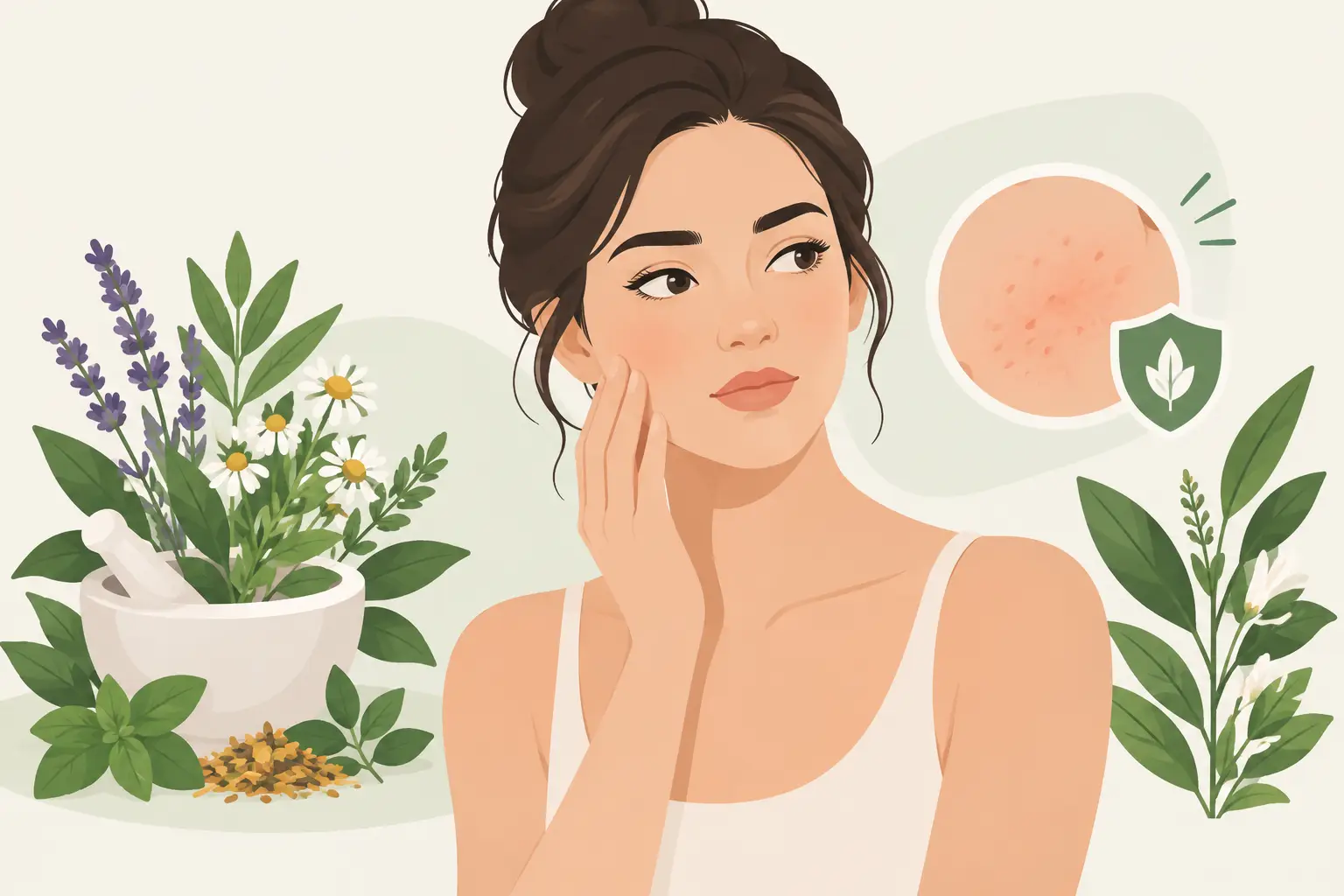
A bar can smell like a herb garden and still be the wrong choice for reactive skin. So, do botanicals irritate? They can – but the answer depends on the specific plant ingredient, how much is used, the rest of the formula, and your own skin’s history. “Natural” is not a guarantee of gentleness. Thoughtful formulation is what matters.
For dry, eczema-prone or easily unsettled skin, the aim is not to avoid every plant ingredient forever. It is to choose products with a short, purposeful ingredient list and use them in a way that respects a compromised skin barrier.
Do botanicals irritate skin?
Botanicals are ingredients derived from plants. In soap and skincare, that might mean dried flowers, ground oats, herbal infusions, plant oils, extracts, essential oils or natural fragrance materials. Some bring useful qualities: finely milled oats can make a bar feel comforting, while a carefully chosen herbal infusion can add character without making a formula harsh.
Yet plant-derived ingredients contain naturally occurring compounds, and some of these can cause irritation or an allergic contact reaction in certain people. Essential oils are the most familiar example. They are highly concentrated aromatic plant materials, and even a beautiful, traditional oil can be too much for skin that is already sore, dry or sensitised.
There is an important difference between irritation and allergy. Irritation often happens when the skin barrier is overwhelmed. It may feel like stinging, tightness, redness or dryness soon after use. An allergy is an immune response to a particular ingredient and may show as itchiness, a rash, swelling or a flare that continues after the product has been washed away. Both deserve attention, but they are not the same thing.
A botanical can also be perfectly well tolerated by one person and troublesome for another. Skin is personal. A friend’s favourite peppermint soap may feel refreshing to them and far too stimulating to someone managing facial dryness or hand eczema.
Which botanicals are more likely to cause trouble?
The word “botanical” covers a great deal, so it is not useful to treat all plants alike. The form of the ingredient matters as much as the plant itself.
Essential oils and fragrance materials
Essential oils such as peppermint, eucalyptus, citrus, lavender and tea tree are often chosen for their scent and sensory appeal. In a well-made wash-off product, used at an appropriate level, they may suit many people. But fragrance is one of the more common sources of sensitivity in skincare, whether it comes from a laboratory or a plant.
This does not make essential oils bad. It means they are not automatically the best starting point for highly reactive skin. If your skin is currently flaring, keeping cleansing simple is usually wiser than chasing a strong scent or tingly feeling.
Plant families and personal sensitivities
People with known sensitivities to particular plants may also need to take care with related extracts. For example, those who react to plants in the daisy family may find chamomile, calendula or arnica worth approaching cautiously. Citrus oils can be an issue for some, especially in leave-on products, and spice extracts can feel warming rather than soothing on delicate skin.
A reaction is not always caused by the botanical itself. A formula may include several aromatic ingredients, colourants, preservatives or exfoliating particles. That is why reading the whole ingredient list matters more than focusing on one fashionable plant.
Physical exfoliants
Botanicals can irritate through texture as well as chemistry. Crushed herbs, seeds, shells and coarse powders may create friction, particularly on inflamed, fragile or very dry skin. A scrubby bar can feel satisfying on hardworking hands, but it is rarely the kindest choice for an already compromised face or an eczema flare.
Why formulation matters more than a pretty ingredient list
A gentle product is not made gentle by adding a soothing-sounding extract. It is made through balance: the quality of the base oils and fats, the amount and type of fragrance, the level of exfoliation, the curing process and the care taken at every stage.
Traditional cold-process soap is naturally alkaline, while healthy skin is mildly acidic. For some people, even a simple bar soap can feel drying if used too frequently, with very hot water, or on a damaged barrier. This is not a reason to fear soap. It is a reason to match the bar and your routine to your skin’s needs.
At Luna Natural Soap Co., tallow is slow-rendered in-house and paired with considered ingredients to create firm bars with a rich, creamy lather. Tallow is valued for its skin-compatible fatty acids and naturally comforting feel. Still, even a nourishing base does not cancel out a sensitivity to another ingredient. A product should be chosen as a complete formula, not because of one hero ingredient on the label.
The same principle applies to “free from” claims. Fragrance-free may be a helpful choice for reactive skin, but it does not guarantee that every person will tolerate every formula. Conversely, a lightly scented botanical soap may be entirely comfortable for someone without sensitivities. Honest skincare leaves room for both realities.
How to choose botanical soap for sensitive skin
Start with the condition your skin is in now, not the skin you hope to have in a month. If it is cracked, weeping, intensely itchy or actively inflamed, simplify your routine and seek advice from a pharmacist, GP or dermatologist. A new artisan bar is not the moment to experiment during a serious flare.
When your skin is settled, choose with care. Look for a short ingredient list you can understand, a low-fragrance or fragrance-free option, and a bar without rough exfoliating pieces if dryness is your main concern. Oat-based soaps are often a gentle place to begin, provided you do not have an oat allergy. A plain, unscented bar can be the clearest test of what your skin genuinely enjoys.
Before using a new product widely, try it on a small area of intact skin for several washes. A wash-off soap needs to be assessed differently from a cream: lather briefly, rinse thoroughly and watch the area over the next day or two. Do not test on broken skin, and stop if you notice burning, persistent redness, itching or a rash.
A few small habits can make just as much difference as the bar itself:
- Use lukewarm rather than hot water, which can strip comfort from dry skin.
- Keep cleansing brief. More lather and more scrubbing do not mean cleaner skin.
- Pat skin dry instead of rubbing it with a towel.
- Apply a suitable moisturiser promptly after washing, especially to hands and body.
If you are trying to identify a trigger, introduce one new product at a time. It is tempting to change your soap, body lotion, shampoo and washing powder all at once. But if your skin objects, you will have no clear way to know why.
When a botanical reaction needs more than a product swap
Stop using the product if you develop a spreading rash, significant swelling, blistering, hives or ongoing discomfort. Wash the area gently with water and seek medical advice, particularly if symptoms are severe, affect the eyes or face, or involve breathing difficulties. Anyone with persistent eczema or repeated unexplained reactions may benefit from professional assessment and, where appropriate, patch testing for contact allergies.
There is no prize for persevering with a product that does not suit you. Skincare should feel like care, not endurance. The best botanical soap is not the most fragrant or the most decorated one – it is the one your skin can use comfortably, day after day, with simple pleasure.