

A beautiful handmade bar should soften in your hands, not collapse into a damp puddle beside the basin. Knowing how to prevent soap mushiness is less about buying harder soap and more about giving each bar the right conditions between washes. Keep water moving away, allow air to circulate and use only what you need. Your soap will last longer, feel more luxurious and produce the rich lather it was made for.
Natural soap is designed to be used, so a little softening is normal. The problem begins when a bar sits in standing water or remains wet for hours. This is especially common in busy family bathrooms, on flat soap dishes and in shower niches where steam lingers long after everyone has finished.
Why does soap turn mushy?
Traditional bar soap dissolves when water meets its surface. That is exactly how it cleanses. But when a wet bar cannot dry out, the outer layer keeps dissolving even when nobody is using it. Over time, it becomes soft, slippery and less pleasant to hold.
Mushiness is not automatically a sign of poor-quality soap. A carefully made cold-process bar, rich in skin-loving fats and free from harsh synthetic detergents, may feel gentler and creamier than a highly processed commercial bar. Its lifespan depends heavily on how it is stored.
Humidity matters too. A bar kept beside a steamy shower will dry more slowly than one near an open window or on a well-ventilated shelf. The same soap can last very differently in two households simply because one bathroom stays damp.
How to prevent soap mushiness every day
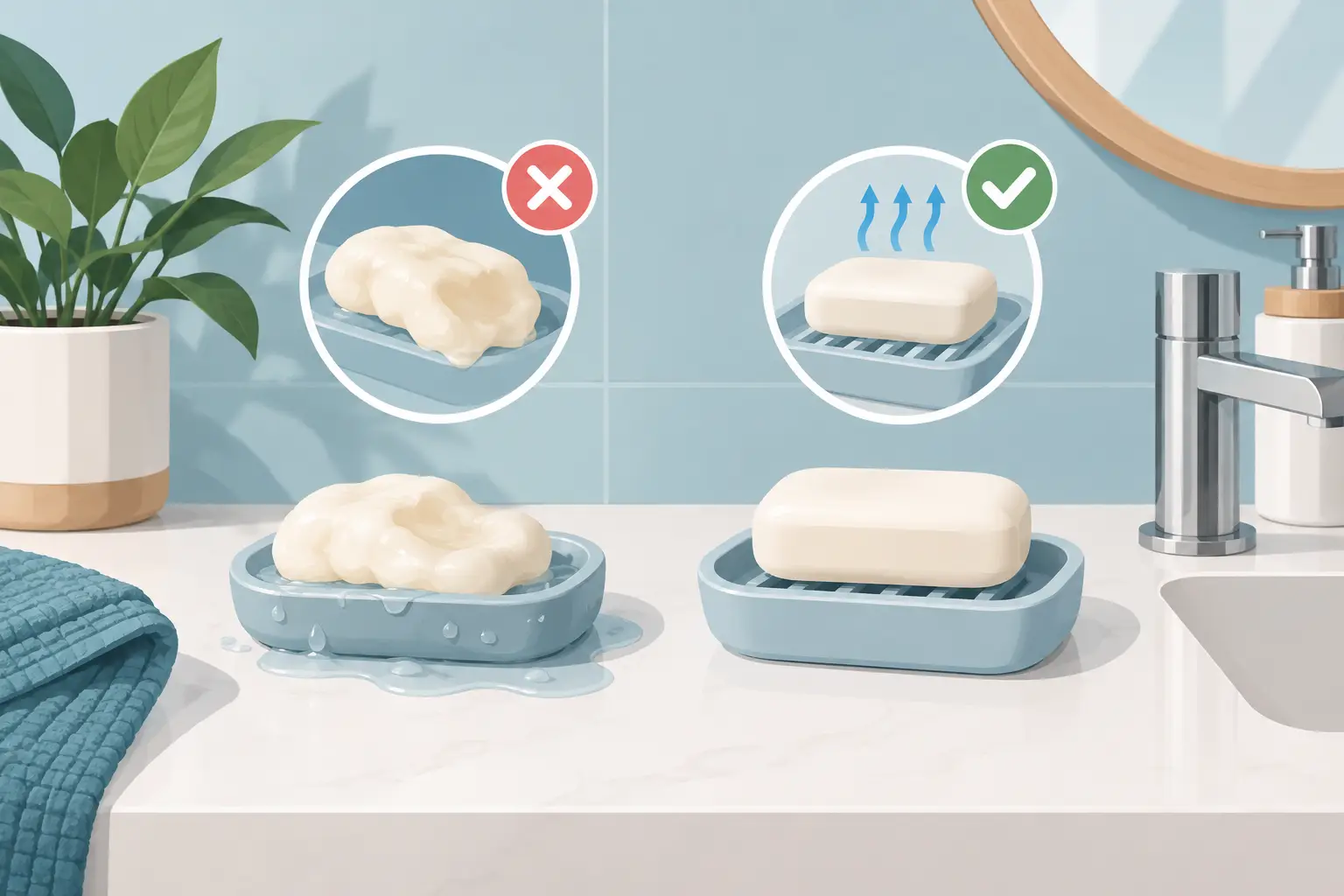
The simplest rule is this: soap needs drainage and airflow. A dish that looks lovely but holds water underneath the bar will work against you. Choose one with raised ridges, holes or slats, so water can run away from the soap rather than gather beneath it.
After washing, place the bar back on its draining surface instead of leaving it on the edge of the bath, the shower floor or a wet flannel. If the dish has collected water, tip it out when you notice it. This small habit makes a genuine difference.
Keep the soap out of the direct stream of water. A shower caddy, corner shelf or soap saver positioned away from the shower head is usually a better home than a built-in niche that gets soaked each time the shower is used. In a compact bathroom, even moving the dish a short distance can help the bar dry properly.
It also helps to use a modest amount of water when building lather. Wet your hands or flannel, rub the bar briefly, then set it down. There is no need to keep the soap under running water while you wash. A good handmade bar should lather beautifully with a little water and gentle friction.
Choose a soap dish that actually drains
A soap dish is not merely a bathroom accessory. It is part of how well your bar performs. The best option has an open structure that exposes the underside of the soap to air. Wooden slatted dishes, raised ceramic trays and well-designed draining soap savers can all work well, provided water has somewhere to go.
A solid saucer is better than leaving soap directly on the basin, but it needs regular emptying. If water pools overnight, the base of the bar will stay soft no matter how firm the top appears. Likewise, a sponge-like holder can be useful only if it dries between uses. A permanently damp sponge simply transfers moisture back into the bar.
For households that get through several bars at once, give each one its own drying space. Stacking soaps together, or pressing a fresh bar against an old damp one, traps moisture where you least want it.
Consider a soap saver bag for small pieces
When a bar becomes too small to hold comfortably, place the remaining piece in a natural-fibre soap saver bag. It lets you use every last fragment while helping the soap dry between washes. Hang the bag from a hook rather than leaving it in the bottom of the shower.
This is a practical way to reduce waste, particularly with soap ends. The bag will still need airflow, so give it a quick squeeze after use and keep it away from constant spray.
Let your bar rest between uses
One bar can certainly serve a whole household, but it may struggle to dry fully in a very busy bathroom. If several people shower or wash hands frequently throughout the day, rotating between two bars can be worthwhile. While one is in use, the other has time to become properly firm again.
This is not about making soap feel precious or inconvenient. It is about respecting a handmade product made with traditional methods and thoughtfully chosen ingredients. A well-rested bar is easier to hold, kinder to your budget and more satisfying to use.
If you keep different soaps for hands, body and face, avoid moving a wet bar from one room to another. Give each bar a permanent dish where it can dry. This also helps prevent a fragrant botanical body soap from leaving residue in your facial cleansing space.
Start with a properly cured bar
Curing is the patient stage of traditional soapmaking. After a cold-process soap is made, it needs time for excess water to evaporate and for the bar to become harder and longer-lasting. A properly cured bar will still soften if left in water, but it has a far better chance of holding its shape through daily use.
At Luna Natural Soap Co., our bars are made in small batches using traditional methods, including slow-rendered tallow from carefully sourced local farms. Tallow contributes to a firm, creamy bar and a comforting lather, while a thoughtful cure gives the finished soap time to reach its best.
If you make soap at home, do not rush this stage. The exact curing time depends on the formula, bar size and environment, but several weeks is common for cold-process soap. A bar that feels firm to the touch may still benefit from more time on the curing rack.
For bought soap, keep unopened bars in a cool, dry cupboard until you are ready to use them. Do not store them in an airtight plastic container, where any remaining moisture can be trapped. A breathable box or paper wrap in a dry linen cupboard is a better choice.
A few habits that shorten a bar’s life
Most soap mushiness comes down to water, but a few everyday habits can make it worse. Avoid rubbing the entire bar directly onto soaking-wet skin for a long time, especially in the shower. Lathering in your hands first gives you more control and uses less soap.
Do not leave the bar wrapped in a wet washcloth or tucked inside a closed travel case after use. For travel, allow it to dry before packing whenever possible. If you must pack it damp, unpack and air it out as soon as you arrive.
Be mindful of heat as well. A radiator shelf, sunny windowsill or very warm bathroom can make natural soap sweat or soften unevenly. Dry and airy is ideal, but extreme heat is not.
What if your soap is already soft?
A mushy bar is rarely beyond saving. Move it to a draining dish in a dry, well-ventilated spot and leave it alone for a day or two. Much of the surface softness can firm up once excess water has evaporated.
If the bar has become misshapen, resist the urge to squeeze it back into place. Use it gently until it is smaller, then transfer it to a soap saver bag. The soap will still cleanse beautifully, and using it to the end honours both the ingredients and the craft behind it.
A bar of soap is a small daily ritual. Give it a dry place to rest, and it will reward you with a firmer feel, a generous lather and many more calm, comforting washes.