

A beautifully firm bar of tallow soap does not need an inflated ingredient story to earn its place at the basin. So, does tallow contain vitamins? Yes, rendered tallow can contain naturally occurring fat-soluble vitamins, but the honest answer is more nuanced than a simple list on a label.
The amount present depends on the animal, its diet, the part of the fat used, and how carefully the tallow is rendered and stored. For skin, tallow’s lasting value is not that it should replace a varied diet or act as a vitamin treatment. It is its naturally skin-compatible fatty-acid profile, its rich feel, and its ability to create a gentle, satisfying cleanse when made well.
Does tallow contain vitamins? Yes, but amounts vary
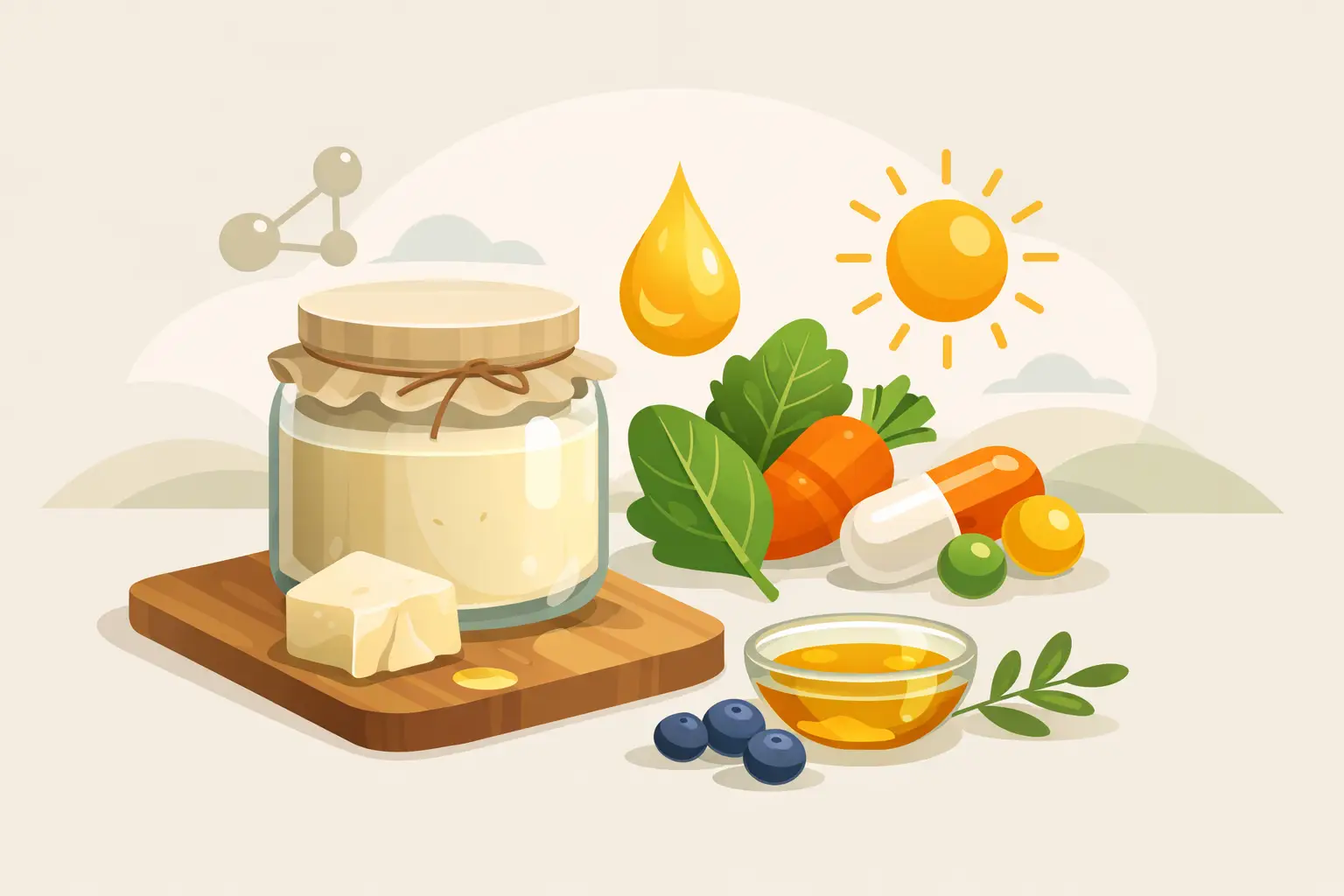
Tallow is purified beef fat. Like other animal fats, it may carry fat-soluble vitamins – principally vitamins A, D, E and K. These vitamins dissolve in fat rather than water, so they are the ones most likely to be present in rendered tallow.
That said, no two batches are identical. Cattle raised on varied pasture may have a different nutrient profile from conventionally raised cattle, while seasonal feed, breed, age and the specific fat trim all make a difference. Rendering temperature, exposure to air and storage conditions can also affect delicate compounds over time.
This is why it is more accurate to say that quality tallow may contain naturally occurring fat-soluble vitamins than to promise a fixed vitamin dose. Unless a batch has been laboratory tested, there is no reliable way to state exactly how much vitamin A, D, E or K is in a particular jar of tallow or bar of soap.
Vitamin A, D, E and K
Vitamin A is associated with normal skin function, while vitamin D supports many processes in the body. Vitamin E is known for antioxidant activity, and vitamin K is another fat-soluble nutrient found in varying amounts in animal foods. Their presence is one part of tallow’s natural composition, not a reason to treat tallow skincare as a nutritional supplement.
For topical products, formulation matters just as much as the ingredient itself. Fresh, carefully rendered tallow, protected from unnecessary heat and oxidation, is a better starting point than old, repeatedly heated fat. Thoughtful sourcing and small-batch production are not decorative details. They help preserve the quality of the raw material from the beginning.
What about vitamin B12?
Vitamin B12 is often mentioned alongside animal-derived ingredients, but tallow is not a dependable source of it. B12 is water-soluble and is generally associated with animal foods containing more protein and moisture, such as meat, fish, eggs and dairy. Pure rendered fat should not be relied upon for meaningful B12 intake or topical benefit.
That distinction matters. A clear ingredient story is always better than a crowded one. Tallow can be a wonderful skincare ingredient without asking it to do jobs that belong to food, medicine or a well-formulated leave-on treatment.
What happens to vitamins when tallow becomes soap?
Cold-process soapmaking transforms oils and fats through saponification. Tallow combines with an alkali solution and becomes soap and naturally produced glycerine. The finished bar is not simply melted tallow pressed into shape, and its benefits should be understood as those of a well-made cleansing bar.
Some naturally occurring compounds may remain after soapmaking, especially when a recipe includes a small amount of extra fat beyond what is needed for saponification. Yet soap is a rinse-off product, used briefly and washed away. It is not realistic to expect a bar of soap to deliver vitamins to the skin in the way a daily dietary source or carefully designed leave-on product might.
Its practical strength lies elsewhere. A properly cured tallow soap makes a firm, long-lasting bar with a creamy lather. It can cleanse without the stripped, squeaky feeling that harsh detergents leave behind. For dry or sensitive skin, that gentler cleansing experience can make the daily ritual feel far more comfortable.
Why tallow can still feel so good on dry skin
Our skin barrier is supported by lipids, the natural oils and fats that help reduce moisture loss and keep skin feeling comfortable. Tallow contains a blend of fatty acids, including palmitic, stearic and oleic acids. This composition is one reason tallow has been valued in traditional soapmaking and skincare for generations.
In a soap bar, tallow brings structure and creaminess. In a balm or moisturising product, it can provide an emollient layer that leaves skin feeling soft and cushioned. The experience is especially appealing when hands are weather-worn, when legs feel tight after showering, or when facial skin is asking for a simpler routine.
There is a trade-off, as with any ingredient. Tallow-rich products can feel too substantial for some people with very oily or congestion-prone skin, particularly in a leave-on formula. A patch test is sensible if your skin reacts easily, and persistent eczema, rashes or broken skin deserve advice from a qualified healthcare professional.
The quality of the tallow matters more than a vitamin claim
Not all tallow is made with the same care. The quality of the starting fat, the rendering process and the time between rendering and use all influence the final ingredient. Clean, slow rendering helps remove impurities while respecting the character of the fat. Properly stored tallow should smell clean and mild, rather than stale or overly beefy.
At Luna Natural Soap Co., tallow is rendered in-house from locally sourced, grass-fed fat. This approach gives greater control over the ingredient at every stage, from sourcing to the final cured bar. It also supports a more considered use of an ingredient that might otherwise go to waste.
That circular approach has a practical benefit as well as an ethical one. When an ingredient is handled with care rather than treated as a cheap by-product, it can become part of a purposeful, low-waste skincare ritual. A plastic-free bar that lasts well at the sink asks less of your bathroom cupboard and less of the bin.
How to choose tallow skincare with confidence
Look beyond broad claims about vitamins. Ask whether the tallow is clearly sourced, whether the maker explains how it is rendered, and whether the formula suits the way you plan to use it. A simple tallow soap can be ideal for everyday hand and body cleansing. A tallow balm may be better suited to dry patches, elbows, heels or a night-time moisture boost.
For sensitive skin, fewer unnecessary extras can be helpful. Strong fragrance, heavy essential-oil blends and harsh surfactants can complicate an already reactive routine. A traditionally made, well-cured tallow bar with a short ingredient list offers a calm place to start.
There is no need to chase tallow for a vitamin tally. Choose it for what it genuinely offers: a time-honoured, richly conditioning ingredient, responsibly sourced and carefully made into products that bring comfort to real skin. Sometimes the most luxurious routine is simply the one your skin is happy to return to tomorrow.