


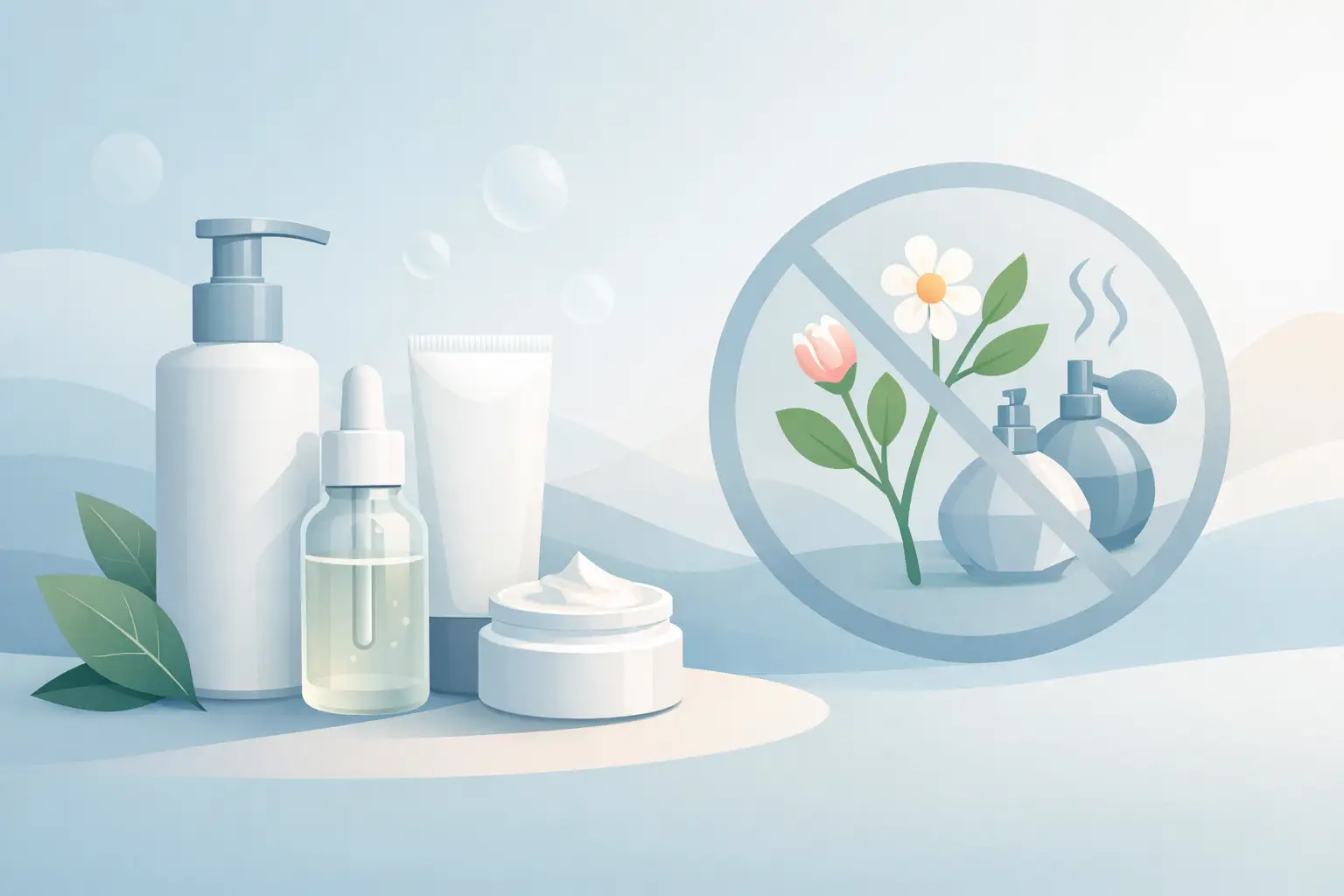
If your skin feels tight after washing, stings when you try a new cream, or flares for no obvious reason, fragrance is one of the first things worth questioning. A good guide to fragrance free skincare routine choices starts there – not with a 10-step ritual, but with the simple task of removing what may be irritating your skin in the first place.
For many people, fragrance is not the problem every single time. That is what makes it tricky. Skin can tolerate a scented cleanser for months, then suddenly react when the barrier is already stressed by weather, over-cleansing, actives, or an eczema flare. What looked like “sensitive skin” can sometimes be skin that is simply overexposed.
Why fragrance matters more than most people think
Fragrance in skincare usually means either synthetic perfume, essential oils, or fragrant plant extracts added mainly for scent. A product can smell floral, minty or fresh, but your skin does not read that as luxury. It reads ingredients. And when the barrier is compromised, fragrant ingredients can increase irritation, redness, dryness, itching, or that persistent low-level sting people often dismiss.
This does not mean every scented product is automatically bad. It does mean that if your skin is reactive, dry, eczema-prone, or unpredictable, fragrance is often an unnecessary risk. Skincare works best when it supports the skin’s natural function. Anything extra needs to earn its place.
There is also a practical point here. People often spend money chasing richer creams, stronger serums, or more targeted treatments when the better fix is to simplify. Remove fragrance first. Then judge what your skin actually needs.
A guide to fragrance free skincare routine basics
The best fragrance free routine is usually a short one. Cleanse gently. Add moisture back in. Protect the skin barrier. Use treatment products only when there is a clear reason.
That sounds almost too simple, but simple is often what unsettled skin responds to. A routine with five calm, well-chosen products will usually do more for sensitive skin than a shelf full of “active” formulas layered for the sake of it.
Step 1: Cleanse without stripping
Your cleanser sets the tone for everything else. If it leaves your face squeaky, taut, or warm, it is probably too harsh. Fragrance-free cleansing should remove sweat, sunscreen and daily grime without disrupting the skin’s own oils.
For dry or reactive skin, a gentle cream cleanser, balm, or mild soap designed for sensitive skin can work well. Traditional soap does need a little nuance here. Some soaps can be drying, particularly if they rely on harsh detergents or poor-quality fats. But well-made, nourishing bars built around skin-compatible ingredients can feel very different, especially for body care and for those who prefer simple, low-waste washing.
The key is what your skin does afterwards. Calm skin is the goal. Not that over-cleansed feeling some people mistake for “really clean”.
In the morning, some people can skip cleanser altogether and use lukewarm water if their skin is very dry. In the evening, cleanse properly to remove the day. If you wear heavy make-up or water-resistant SPF, you may need a first cleanse followed by a second gentle cleanse. If not, one thorough wash is often enough.
Step 2: Moisturise while skin is still slightly damp
A fragrance-free moisturiser helps seal in water and reduce transepidermal water loss. In plain terms, it helps your skin hold on to hydration instead of losing it to the air. That matters even more in colder weather, central heating, and windy conditions – all common triggers for dry, uncomfortable skin in the UK.
Look for formulas focused on barrier support rather than marketing theatre. Fatty acids, glycerine, ceramides, oats, tallow, squalane and other straightforward emollients can all be useful. The right texture depends on your skin. A lighter lotion may suit combination skin. A richer balm may suit eczema-prone or very dry areas.
This is one of those places where it depends. If your skin is greasy but dehydrated, a heavy cream might feel smothering. If your skin is flaky and sore, a light gel will probably not be enough. Pay attention to comfort, not trends.
Step 3: Use sunscreen that does not provoke your skin
Daily SPF matters, but for sensitive skin the wrong sunscreen can create as many problems as it solves. Fragrance-free is especially helpful here because sunscreen is often worn for long hours and close to the eyes.
Some people do better with mineral filters. Others prefer the texture of modern chemical sunscreens. Neither camp wins by default. What matters is whether you will actually wear it, reapply it, and tolerate it.
If every sunscreen you try makes your skin smart or your eyes water, strip your routine right back for a week or two, then test one fragrance-free option at a time. It is slower, but far more useful than guessing.
How to choose products without getting misled
“Unscented” and “fragrance free” are not always the same thing. Unscented products may still contain fragrance ingredients used to mask the smell of the formula. Fragrance-free usually means no added fragrance, though it is still worth checking the ingredient list.
Essential oils deserve a mention as well. Because they are natural, many people assume they are gentler. Sometimes they are tolerated perfectly well. Sometimes they are exactly what reactive skin does not need. Lavender, citrus, peppermint, eucalyptus and tea tree can all be too much for a stressed skin barrier.
A better question than “Is it natural?” is “How does my skin behave with it?” Good skincare is not about ideology. It is about results you can feel.
What to remove first if your skin is flaring
When skin is upset, restraint helps. Stop exfoliating acids for a few days. Pause retinoids. Put aside strongly scented masks, scrubs and body lotions. Keep the routine plain until your skin settles.
This is where many people go wrong. They treat irritation with more products. A damaged barrier rarely wants more stimulation. It wants less friction, less fragrance, and more consistency.
For a basic reset, think in three parts: gentle cleanse, fragrance-free moisturiser, and SPF in the daytime. That may sound minimal, but minimal can be deeply effective.
Building a fragrance free skincare routine for face and body
Facial skincare gets most of the attention, yet body care is often where fragrance overload starts. Shower gels, hand washes, body lotions and even laundry products can leave skin in a constant state of low-grade irritation.
If you are serious about going fragrance free, look beyond your face cream. Swap heavily perfumed body wash for a gentle bar or cleanser. Choose a simple body moisturiser for arms, legs and hands, especially after bathing. If your hands are cracked from washing up or cold weather, a richer balm used little and often makes a real difference.
This wider view matters for families too. If one person in the household has sensitive or eczema-prone skin, it often helps when the bathroom routine is calmer across the board. Less clutter. Fewer variables. Better odds of figuring out what truly works.
For those drawn to traditional skincare, this is where thoughtfully made, low-ingredient products can shine. Handmade bars and balms with a clear purpose, transparent sourcing and no added scent can offer both practicality and comfort. At Luna Natural Soap Co., that belief sits at the heart of how we think about real skin – support first, decoration second.
The trade-offs nobody talks about
Fragrance-free products are not always perfect. Some smell plainly of their raw ingredients. Some textures are less silky than heavily perfumed luxury formulas. Some natural products can still irritate if they contain active botanicals your skin dislikes.
That does not make them poor choices. It just means “fragrance free” is not a magic label. You still need a formula that suits your skin type, climate and routine.
There is also the matter of patience. If your skin has been irritated for weeks or months, it may not calm down overnight. A simpler routine can help quickly, but barrier recovery often takes steady care. Think in weeks, not one dramatic morning.
A simple way to test whether fragrance is the issue
If you suspect fragrance is contributing to your skin problems, change one category at a time for two to three weeks. Start with products that stay on the skin longest, such as moisturiser, sunscreen and body lotion. Then move to cleansers and washes.
Keep the rest of your routine stable while you do this. If you swap six products at once, you learn very little. If irritation improves after removing added fragrance, that tells you something useful. If nothing changes, you can look more closely at other triggers like over-exfoliation, preservatives, actives, weather, or even washing temperature.
When a fragrance free routine makes the biggest difference
A fragrance free skincare routine is especially worth considering if your skin is dry, eczema-prone, red, itchy, recently over-treated, or prone to stinging around the eyes and cheeks. It also makes sense after cosmetic treatments, during seasonal changes, or whenever your skin starts reacting to products it once tolerated.
And if your skin is currently calm? It can still be a wise long-term choice. Less irritation in the routine often means less firefighting later.
The real goal is not to build the most impressive shelf. It is to create a routine your skin can rely on – gentle enough for daily life, effective enough to keep discomfort from creeping back, and simple enough that you will actually stick with it.