

If your skin stings after a shower, feels tight by lunchtime, or flares for no obvious reason, soap is often one of the first places to look. Fragrance is a common trigger, but it is not the only one. For many people, the search for unscented soap for allergies is really a search for calm – fewer ingredients, fewer reactions, and a cleanser that leaves the skin barrier intact rather than stripped.
That is where a little clarity helps. “Unscented” sounds simple, yet not every unscented bar is equally gentle, and not every reaction is caused by scent alone.
Why unscented soap for allergies can help
Fragrance mixes are among the most common causes of contact allergy in skincare. Even when a product smells pleasant and natural, the compounds behind that scent can irritate sensitive or allergy-prone skin. Essential oils can be just as troublesome as synthetic fragrance for some people.
An unscented soap for allergies removes one major variable. That matters when your skin is already stressed, whether from eczema, seasonal flare-ups, over-washing, or a disrupted barrier. A simpler formula gives your skin less to react to and makes it easier to work out what is helping and what is not.
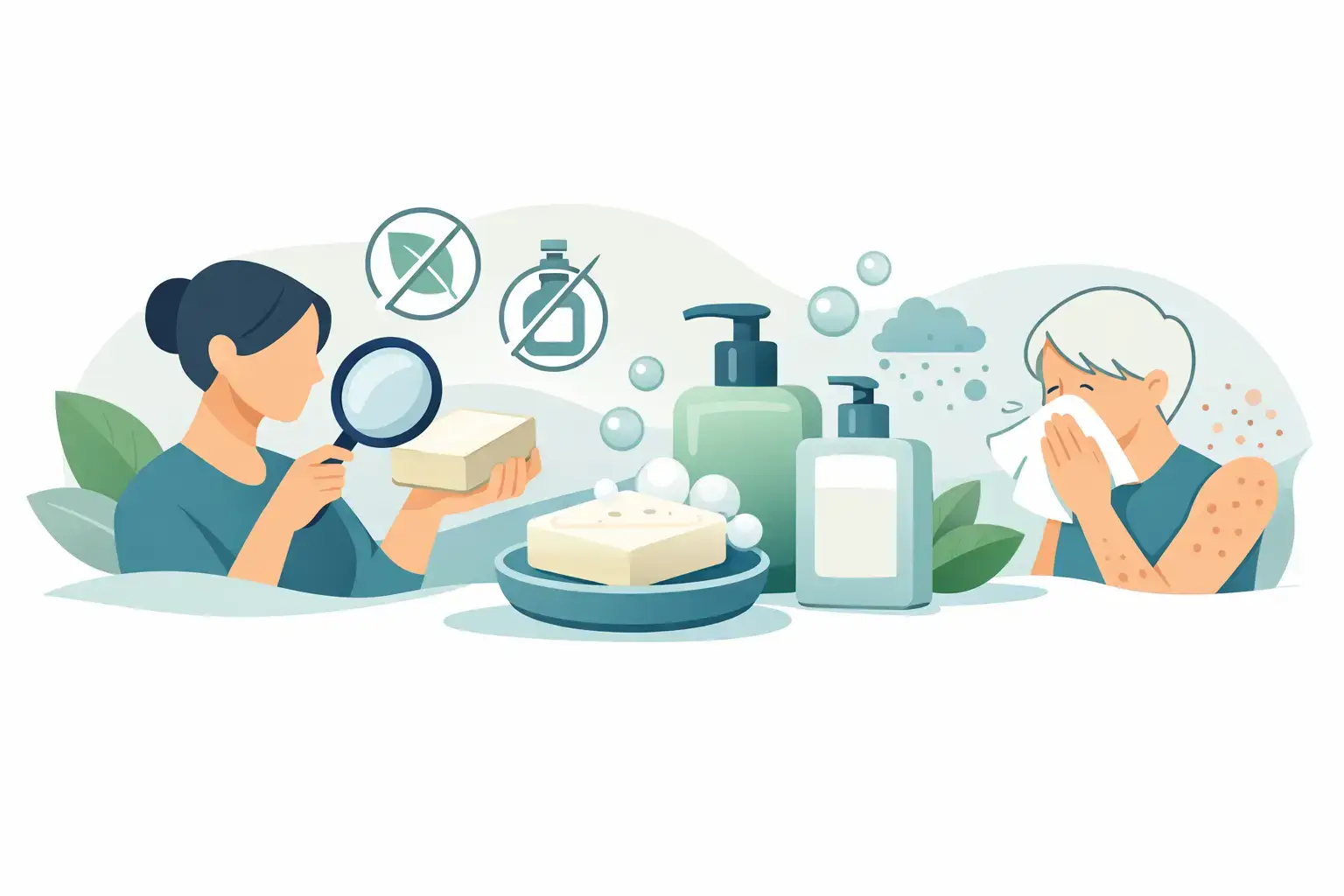
Still, unscented does not always mean minimal. Some products use masking ingredients to neutralise odour. Others are free from added perfume but still contain botanical extracts or preservatives that can bother reactive skin. The label matters, but the full ingredient list matters more.
What “unscented” really means on a label
This is where many people get caught out. “Unscented” usually means no noticeable fragrance in the finished product. It does not always mean fragrance-free in the strictest sense.
Some formulas include ingredients that suppress or balance the natural smell of the base oils. That can be fine for some skin types, but for allergy-prone skin, simpler is usually safer. If you are choosing an unscented soap for allergies, look beyond the front of the pack and check the ingredients panel for added fragrance, parfum, essential oils, and a long list of aromatic plant extracts.
A bar may also carry the natural scent of its raw ingredients. That is different from added perfume. Traditional soap made with quality fats and oils often has a faint, clean scent of its own. For sensitive skin, that can be a much better sign than a heavily perfumed bar trying to feel luxurious.
The ingredients that matter most
When skin is reactive, the best cleansing bars tend to be straightforward. Fewer ingredients. No decorative extras. No aggressive surfactants. The aim is not a dramatic cleanse. It is a gentle wash that respects the skin barrier.
Look for nourishing soap bases made with skin-compatible fats. Traditional tallow soap is a good example. Properly formulated tallow bars are rich, hard, long-lasting, and naturally supportive for dry or delicate skin. Tallow has a fatty acid profile that works well with the skin barrier, which is one reason many people find it more comfortable than harsh foaming cleansers.
Oatmeal can also be useful, especially for skin that feels itchy or unsettled, though even soothing ingredients can be too much for some people during an active flare. That is the trade-off with allergy-prone skin. Ingredients that are gentle in general are not automatically right for every individual.
What you may want to avoid is just as important. Added fragrance is the obvious one. Essential oils, strong exfoliants, bright clays, heavy colourants, and long ingredient lists are also worth treating with caution. If your skin is already irritated, less is often better.
Unscented soap for allergies and sensitive skin – what to look for
A good bar should cleanse without leaving your face or hands feeling squeaky. That “squeaky clean” feeling is often a sign that your skin has been stripped.
For allergy-prone skin, a better bar usually has a creamy lather, rinses cleanly, and leaves the skin feeling soft rather than dry. Handmade cold-process soap can be especially appealing here because it is often made with a more considered balance of cleansing and conditioning oils. The quality of the ingredients and the soapmaking method both influence how the bar behaves on the skin.
This is also where craftsmanship matters. A carefully made bar is not just about appearance. It is about curing time, ingredient integrity, and the final feel on the skin. Small-batch soapmakers who are transparent about sourcing and formulation tend to give you a clearer sense of what is in the bar and why.
When unscented is not enough
If you have tried multiple fragrance-free or unscented products and your skin still reacts, the issue may be elsewhere. Some people are sensitive to preservatives. Others react to certain botanicals, lanolin, coconut-derived cleansers, or even laundry products left on towels and clothing.
There is also the possibility that what looks like a soap allergy is actually a damaged skin barrier. Skin that is cracked, over-exfoliated, or inflamed can react to products that would normally feel mild. In that case, switching to an unscented soap for allergies can help, but so can shortening showers, avoiding very hot water, and using a simple moisturiser straight after washing.
If reactions are severe, persistent, or spreading, patch testing through a medical professional can be worth considering. It takes the guesswork out of a very frustrating process.
How to test a new soap carefully
When your skin is temperamental, introducing anything new deserves patience. Even the gentlest-looking bar should be tested slowly.
Start by using the soap on a small area, such as the inner forearm, once daily for several days. Watch for itching, redness, dryness, or little bumps. If all seems well, move to a small area of the body before using it more widely. Facial skin can be more reactive than the body, so leave that until last if your face is particularly sensitive.
It is tempting to change everything at once when your skin is unhappy, but that makes it harder to identify the problem. One new product at a time is the steadier approach.
Choosing a bar for the whole family
Many households are not shopping for one skin type. They are trying to find one dependable soap that works for dry hands, children’s bath time, post-gym showers, and skin that can flare without warning.
In that case, a plain unscented bar made with nourishing, traditional ingredients is often the most practical choice. It keeps the routine simple. It also reduces the parade of half-used bottles around the bath.
This is one reason many people move towards handmade bars with a clear ingredient philosophy. They want something gentle enough for everyday use, solid enough to last, and uncomplicated enough to trust. At Luna Natural Soap Co., that same thinking shapes how we make our unscented and sensitive-skin bars – with slow-rendered tallow, traditional methods, and ingredients chosen for skin comfort rather than perfume.
A few signs you have found the right soap
The right soap rarely announces itself with drama. Your skin just feels quieter. You stop thinking about it so much.
After washing, your skin should feel clean but comfortable. Not tight. Not hot. Not desperate for rescue. Over a week or two, you may notice less dryness, fewer random stings, and fewer flare-ups caused by simple daily washing.
That said, soap is only one part of the picture. Hard water, weather, stress, fabrics, and over-cleansing can all affect the skin. A good bar helps, but it works best as part of a calmer routine overall.
The gentlest choice is often the simplest one
When skin is reactive, there is a natural urge to search for a miracle ingredient. More often, relief comes from removing the obvious stressors and returning to the basics. A well-made, unscented bar with a short, thoughtful ingredient list can do far more for allergy-prone skin than a bathroom shelf full of products promising instant transformation.
If you are choosing unscented soap for allergies, trust quiet formulation over clever marketing. Look for honesty on the label, simplicity in the ingredients, and a bar that supports your skin rather than asking it to tolerate more.
Sometimes the most luxurious thing is not fragrance or foam. It is washing your skin and feeling, at last, that nothing is fighting back.