

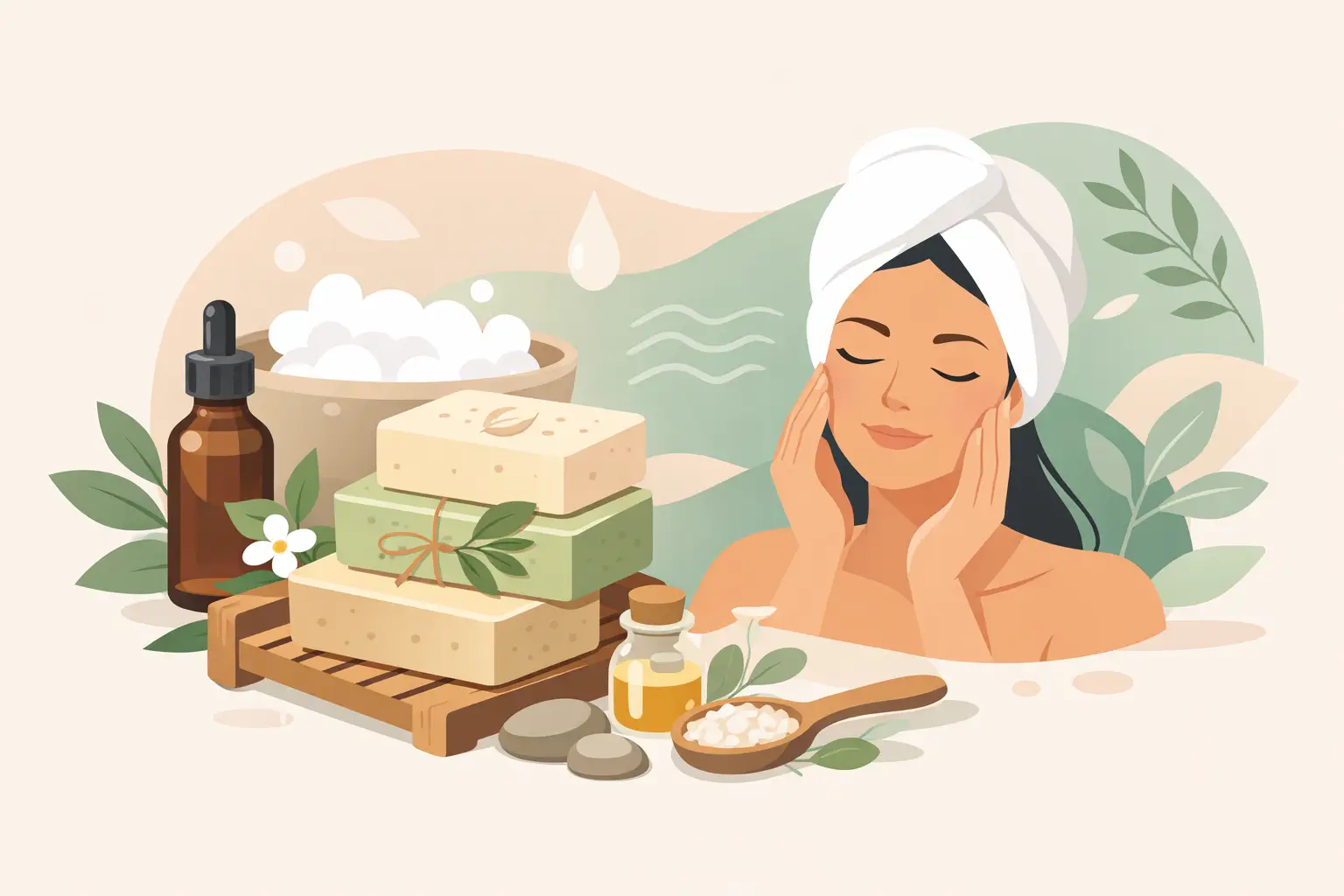
If your skin feels tight after washing, your cleanser is telling on itself. A good bar should leave skin clean, comfortable and settled – not squeaky, stripped or itching for moisturiser. That is the real starting point for any natural soap guide: understanding that cleansing should support the skin barrier, not work against it.
Natural soap has become a broad term, and not every bar sold under that label is made with the same care. Some are beautifully simple. Others lean on clever packaging and little else. If you are shopping for yourself, your family, or a thoughtful gift, it helps to know what actually matters inside the bar, how it is made, and why one soap suits dry, sensitive skin while another is better for oilier or more congested skin.
What natural soap really means
At its core, soap is made when fats or oils react with an alkali. That sounds technical, but the result can be wonderfully straightforward: a solid bar that cleanses with far fewer unnecessary extras than many liquid washes. In a well-made natural bar, the ingredient list is usually short and recognisable. You will often see fats such as tallow, olive oil or coconut oil, alongside lye, water and perhaps botanicals, clays or essential oils.
What makes a bar feel premium is not just that it contains natural ingredients. It is the quality of those ingredients, the balance of the formula, and the method behind it. Traditional cold-process soapmaking allows the bar to cure slowly. That slower method tends to produce a firmer bar, a richer lather and a gentler wash. It also gives the maker more control over the final feel on the skin.
There is a trade-off here. Natural soap is not trying to behave like a high-foam detergent bar. If you are used to synthetic cleansers that create lots of bubbles and leave skin feeling extremely bare, a proper natural bar may feel quieter at first. For many people, especially those with dry or sensitive skin, that is exactly the point.
A natural soap guide to ingredients that matter
When reading a label, it helps to look past front-of-pack claims and focus on the base oils or fats. These do the heavy lifting. They shape how the bar cleanses, how creamy the lather feels and whether skin feels nourished afterwards.
Tallow deserves attention here because it is often misunderstood. Properly rendered, high-quality tallow is exceptionally skin-compatible. Its fatty acid profile works beautifully in soap, creating a creamy, conditioning lather that cleanses without leaving skin distressed. It is also naturally rich in vitamins A, D, E, K and B12, which is one reason many people with dry or troubled skin find tallow-based bars more comforting than harsher alternatives.
Olive oil is another classic. It is known for mildness and can create a gentle bar, though on its own it may produce a softer lather. Coconut oil brings cleansing power and bubbles, but too much can be drying, especially for sensitive skin. Castor oil is often used in small amounts to improve lather. Oatmeal, goat milk and certain clays can add a soothing or refining quality depending on the formula.
Essential oils can be lovely, but more is not always better. If your skin is reactive, a lightly scented bar or an unscented option may serve you better. Herbal mint or citrus can feel fresh and uplifting, yet fragrance sensitivity is real. The right choice depends on your skin, not just the scent profile you enjoy most.
Why traditional soapmaking changes the result
A bar is only as good as its process. Cold-process soapmaking is slower and less flashy than mass production, but it preserves the character of the ingredients and creates a bar with substance. A cured cold-process bar usually lasts longer in use and feels more refined on the skin.
There is also something reassuring about soap made in small batches. It allows for close attention to sourcing, consistency and quality. When a maker renders tallow in-house and sources from local regenerative farms, that is not just a romantic detail. It points to traceability, freshness and a more thoughtful supply chain.
For shoppers who care about sustainability, this matters. Waste can be reduced at several points – from using whole-animal fats that might otherwise be discarded, to avoiding plastic packaging, to making practical use of soap offcuts rather than sending them to landfill. Natural soap can be a simple product, but it can still reflect a bigger ethic of care.
How to choose the right bar for your skin
The best bar for your skin type is not always the most expensive or the most heavily marketed. It is the one that cleans effectively without tipping your skin into dryness, irritation or imbalance.
If your skin is dry, sensitive or eczema-prone, look for bars with a nourishing base and a restrained ingredient list. Tallow, goat milk and oatmeal are often a good place to start. You want a bar that supports calm and hydration rather than chasing an aggressively clean feeling.
If your skin is oilier or more blemish-prone, you may still want gentleness, but with a little more cleansing lift. A bar with mineral-rich clay or balancing botanicals can be useful. Even then, stripping the skin usually backfires. Over-cleansing can leave skin feeling both dry and congested.
For family use, simplicity wins. A mild, all-round bar is often more practical than having a different cleanser for every person at every sink. For gifting, scent and presentation matter more, but quality still shows through. A beautiful artisan bar with a clear story of craftsmanship and ingredients feels far more personal than a generic boxed set.
Signs a bar is not as natural as it looks
Marketing can blur the lines. A bar may mention botanicals on the front while relying heavily on synthetic fragrance, fillers or detergent ingredients. That does not automatically make it unusable, but it does change what you are buying.
Watch for vague language that tells you very little about the formula. Terms like pure, clean or natural-inspired are not especially helpful on their own. A better sign is transparency: clear ingredient lists, honest sourcing details, and specific information about how the soap is made.
It is also worth noticing how your skin responds after a week or two. One wash tells you something. Repeated use tells you more. If your hands become rougher, your body feels itchy, or your face is left tight and shiny, the bar may be too harsh for you even if the branding says otherwise.
The case for a bar in a modern bathroom
Liquid body wash often comes with extra packaging, more processing and a long ingredient list. A well-made soap bar offers a more direct alternative. It tends to last well, travels easily, and can help cut down on plastic in the bathroom.
That said, not every household will switch overnight. Some people prefer a liquid cleanser for convenience or for a particular skin condition. That is fine. The aim is not perfection. It is finding a routine that feels good, works well and aligns with your values where it can.
For many people, natural soap is the easiest low-waste swap to make because the difference is immediate. You can feel the quality in the bar itself – the firmness, the lather, the way skin feels afterwards. And when the soap is made with real care, that experience feels indulgent in the best way: practical luxury.
Getting more from your natural soap guide purchase
A beautiful bar will not last if it sits in a puddle. Keep it dry between uses on a draining dish, and cut larger bars in half if you want them to go further. These small habits make a noticeable difference.
It is also sensible to rotate thoughtfully. If your skin is having a reactive spell, return to the plainest, gentlest option you have. Save stronger scents or exfoliating bars for times when your skin is settled. Natural skincare works best when you respond to what your skin is doing now, not what you wish it were doing.
At Luna Natural Soap Co., that balance of craftsmanship, skin comfort and responsible sourcing is exactly what makes a bar worth bringing into your daily routine. Not because it follows a trend, but because it does a simple job exceptionally well.
The best soap is rarely the loudest one on the shelf. It is the bar you reach for every day because your skin feels calm, your bathroom feels lighter, and the ritual itself becomes one small part of living well.