

You pick up a “natural” soap bar, turn it over, and there it is again: palm oil. Sometimes it hides behind names like sodium palmate. Sometimes it is presented as “sustainably sourced”, with a logo that sounds reassuring. Either way, if you are trying to reduce your palm footprint or you simply want a formula built on different fats, the label can start to feel like a maze.
A good natural soap without palm oil is not a compromise product. It is simply a different style of soapmaking, with its own logic, feel, and performance. The key is knowing what palm oil is doing in a bar, what replaces it, and how those choices show up on your skin – especially if you are dealing with dryness, sensitivity, or eczema-prone flare-ups.
Why palm oil is everywhere in soap
Palm oil is popular because it is a workhorse. In cold-process soap, it helps create a bar that unmoulds cleanly, cures hard, and lasts well in the shower. It also supports a creamy lather and a stable structure that doesn’t go mushy too quickly.
From a maker’s point of view, palm is reliable and relatively consistent. From a shopper’s point of view, it has become controversial because of the real environmental and social issues tied to palm cultivation. Even when “certified sustainable” enters the conversation, many people would rather step away entirely and choose formulas that are easier to trace and feel more aligned with a low-impact, circular approach.
That decision is valid. It just comes with a practical follow-on question: if not palm, then what?
Natural soap without palm oil: what replaces it
When a soap is palm-free, the maker has to build hardness, lather, and skin feel using other fats and butters. There is no single perfect substitute. It depends on the finished bar you want and the skin you are washing.
Tallow is one of the most traditional palm alternatives, and it is having a quiet renaissance for good reason. Properly rendered tallow creates a firm, long-lasting bar with a rich, cushioning lather. It is also deeply skin-compatible because its fatty acid profile is close to the lipids found naturally in our skin barrier. For dry or reactive skin, that “cushion” matters. Cleansing should not feel like a reset button that strips everything away.
Olive oil brings gentle conditioning and a low, creamy lather. Bars high in olive oil can be beautifully mild, but they can also feel slimy if not formulated and cured carefully. A well-made olive-forward soap tends to suit normal-to-dry skin, but it can feel too soft or too mild for those who want a more cleansing feel.
Coconut oil is the big lather-maker. It creates bubbles and strong cleansing, which is helpful in dish soaps and heavily soiled hands. On the face or body, too much coconut oil can feel drying – especially if you are already dealing with tightness, eczema, or winter skin. A palm-free soap can still include coconut oil, but the percentage and the overall recipe matter.
Shea and cocoa butters can add hardness and a creamy feel, but they are not identical to palm in performance. They also change the economics of a bar. Butters are usually more expensive, which is one reason some “palm-free” soaps cost more.
Castor oil helps stabilise lather and improve glide. A little goes a long way. In a palm-free recipe it often plays a supporting role, making the bubbles feel silkier rather than bigger.
A thoughtful palm-free formula is essentially a balancing act. If you want a bar that lasts, lathers, and feels kind to dry skin, you cannot simply remove palm and hope for the best. You build the bar around a different backbone.
The skin question: does palm-free mean gentler?
Not automatically. “Palm-free” is an ethical and sourcing choice. Gentleness is about the whole formula and the method.
True soap is made by saponification – oils reacting with an alkali to create soap and glycerine. That glycerine, when left in the bar, contributes to a more comfortable cleanse. But even a natural, glycerine-rich bar can feel drying if it is too cleansing for your skin type or if it is heavily fragranced.
If your skin is dry, sensitive, or eczema-prone, look beyond the palm-free badge and pay attention to:
- The cleansing oils: high coconut content can be too much for some skin.
- Added fragrance and essential oils: natural does not always mean gentle. Peppermint and citrus can be lively on the senses and less friendly on reactive skin.
- Superfatting and cure time: a well-cured bar tends to be milder and harder, with a nicer feel in use.
Palm-free can be part of a “less is more” approach, but it is not the whole story.
How to read the label (without becoming a chemist)
The easiest win is to learn a few ingredient names.
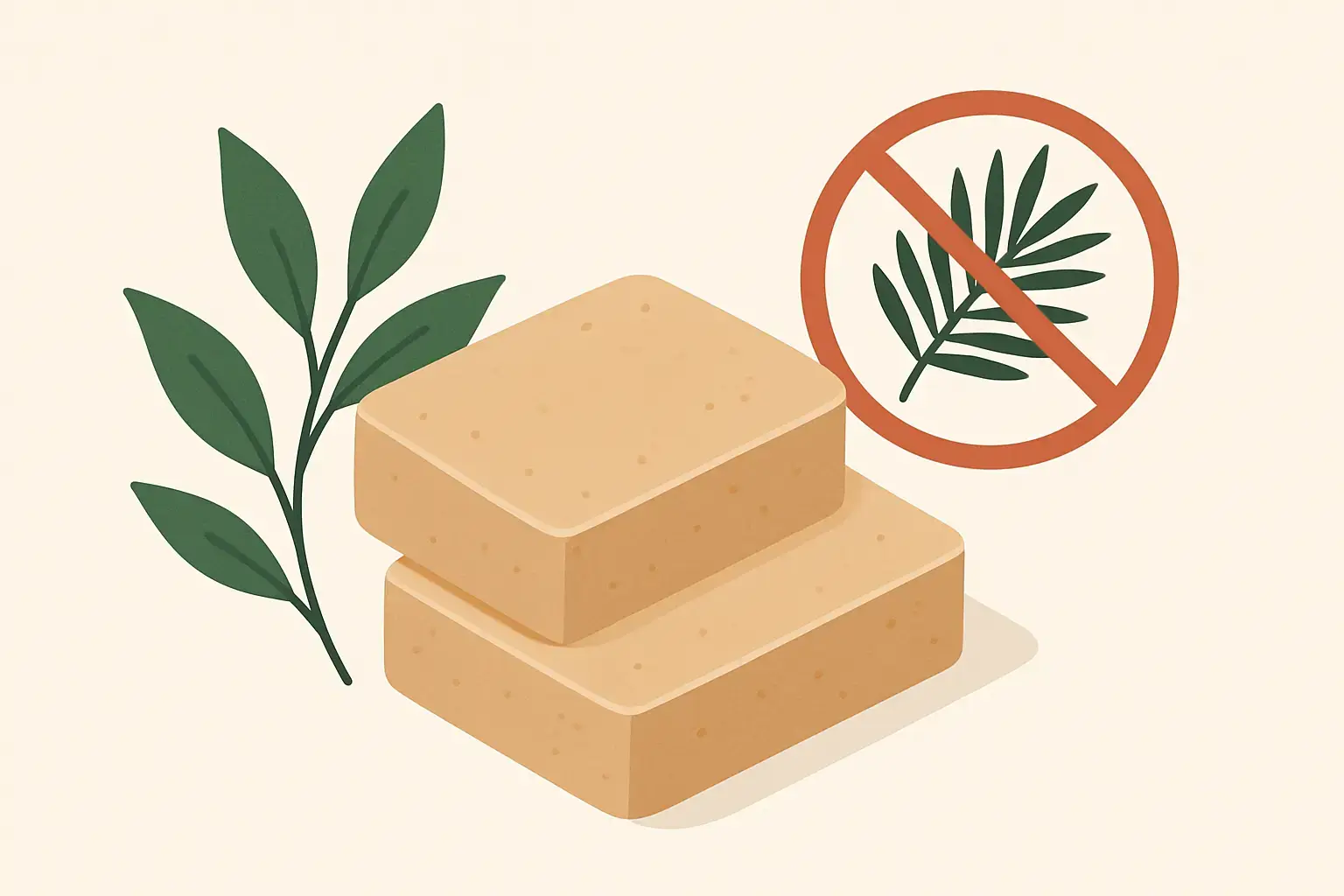
If you see sodium palmate or sodium palm kernelate, that is palm-derived soap. Sometimes you will see “palm oil” stated plainly. If you want natural soap without palm oil, those names are your sign to put the bar back.
Next, look at what takes palm’s place. A palm-free bar built mainly on olive oil will feel different from one built on tallow and butters. Neither is “right”; it depends on what you want from your soap.
Also watch for the difference between true soap and syndet bars. A syndet bar is a detergent-based cleansing bar. They can be great for some people, but they are not soap, and they often include synthetic surfactants. If you are choosing palm-free because you want a traditional, minimal-ingredient bar, you will usually prefer cold-process soap where the oils and lye are clearly listed.
Finally, check what is not being said. A bar can be palm-free and still be wrapped in lots of plastic, or scented to the point of irritation. Palm-free is one part of the decision, not the finish line.
What palm-free changes in your daily use
The most noticeable differences tend to be hardness, lather style, and how your skin feels after rinsing.
A well-formulated palm-free bar can be very hard and long-lasting, but it often requires a different blend of fats to get there. Tallow-heavy and butter-rich bars usually feel dense and substantial in the hand, with a creamy lather that clings rather than foams wildly.
Olive-forward bars can feel silkier but may take longer to build lather. Coconut-rich palm-free bars can lather quickly and feel squeaky-clean, which some people love and others find drying.
If you are switching from a palm-based bar and the new one feels different, that does not automatically mean it is worse. It might simply be a different soap profile. Give your skin a few washes to decide, especially if you are coming off harsh shower gels or heavily fragranced cleansers.
Sustainability: the trade-offs worth acknowledging
Choosing natural soap without palm oil is often driven by environmental concern, but it is still worth being clear-eyed.
Palm’s biggest problem is not that it is a plant oil. It is the scale and impact of how it is grown in many regions. Replacing palm with another ingredient is only “better” if that replacement is also responsibly sourced.
This is where local, transparent supply chains matter. Animal fats like tallow can be a very sensible circular ingredient when they come as a by-product of responsible farming and are processed with care. Instead of treating it as waste, it becomes a high-performing raw material. That is not just a nice story. It can genuinely reduce waste and reward farmers who are working in more regenerative directions.
On the flip side, some shoppers simply do not want animal-derived skincare. That is a personal choice. If that is you, palm-free plant-based soaps can still be excellent, but you may need to accept different lather, a different price point, or a bar that benefits from careful storage to keep it firm.
Who tends to love palm-free tallow soap
If you are buying soap because your skin is fussy, the ingredient backbone matters more than marketing.
People with dry, tight skin often do well with tallow-based soaps because they cleanse without that brittle, “reset” feeling. Parents buying for the whole household often like a bar that works for multiple skin types, lasts in the shower, and does not rely on heavy scent to feel luxurious.
And if you are moving towards low-waste living, a hard, long-lasting bar that performs without plastic bottles is a practical upgrade. It reduces clutter, reduces packaging, and it is easier to travel with than liquid products.
If you are looking for a palm-free bar crafted around slow-rendered, grass-fed tallow and traditional cold-process methods, Luna Natural Soap Co. is one place to start: https://Www.lunasoap.ie
Choosing the right bar for your skin and your sink
One reason people get disappointed by “natural soap” is that they buy a single bar and expect it to do every job.
For face and body, the priority is usually comfort: gentle cleansing, a creamy lather, and a finish that does not leave your skin feeling tight. That often points towards tallow, olive oil, oat-based bars, or lightly scented options.
For kitchen use, the priority is performance: cutting grease, rinsing cleanly, and lasting at the sink. That is where a higher cleansing oil content can be helpful, and where a dedicated solid dish soap makes more sense than sacrificing your nicest body bar.
The most sustainable choice is usually the one you will actually use up with pleasure. A bar that sits on the side because it feels drying or smells overwhelming is not a win, even if the ingredient list is impressive.
A closing thought
If you want natural soap without palm oil, trust your instincts and then verify them with the label. Look for a recipe that is built deliberately, not one that simply removes palm and hopes the rest will behave. The best bar is the one that supports your skin in real life – on cold mornings, after too many hand washes, and in a household where a good soap has to earn its place by the sink.