

A sink full of plates does not need another bottle of bright liquid plastic to get clean. Plastic free dish cleaning can be simple, effective and quietly satisfying when the tools are chosen for the job: a firm soap bar, a proper brush or cloth, and a few habits that make less waste feel effortless.
The aim is not to create a picture-perfect zero-waste kitchen overnight. It is to replace the things you use often with options that last longer, clean well and leave fewer empty bottles behind. For most homes, washing-up is the ideal place to begin.
Why plastic free dish cleaning is worth the switch
Conventional washing-up liquid is usually sold in a single-use plastic bottle. Even when a bottle is recyclable, it still has to be collected, sorted, processed and remade. The pump tops and mixed materials that often come with household cleaners can be harder to recycle than the bottle itself.
A solid dish soap bar removes much of that packaging from the routine. It is concentrated, so you are not paying to transport water around the country, and it can be wrapped simply in paper or sold without packaging at all. A good bar also lasts. You use only what your brush or cloth picks up, rather than squeezing out more liquid than the washing up requires.
There is a practical benefit, too. A firm bar stays put beside the sink. No leaky cap, no half-empty bottle slipping from wet hands, and no cupboard full of duplicate cleaning products.
Start with a solid dish soap that earns its place
Not every solid cleaner performs in the same way. The best choice is a bar made specifically for dishes, rather than a body soap pressed into kitchen service. It should produce a satisfying lather, lift everyday grease and remain firm between washes.
A traditionally made tallow dish soap is a considered option for households looking for a plastic-free alternative. Tallow creates a hard, long-lasting bar with a creamy lather. When paired with thoughtful soap-making, it offers the cleaning power needed for plates, mugs, pans and everyday kitchen surfaces without relying on a plastic bottle.
At Luna Natural Soap Co., solid dish soap is made with the same respect for ingredients and traditional craft that shapes our skincare bars. The tallow is slowly rendered in-house from locally sourced, regenerative farms, creating a useful household staple from an ingredient that might otherwise be overlooked. This is circular living in a form you can use every day.
There is a trade-off to understand. Soap bars work beautifully for normal washing up, but very greasy roasting tins, baked-on cheese or a pan that has been left overnight may need a little more time. Soak first in hot water, use a brush with firm bristles, then return to the soap. A plastic-free routine is not about pretending difficult jobs do not exist. It is about using the right technique before reaching for more product.
How to use a dish soap bar well
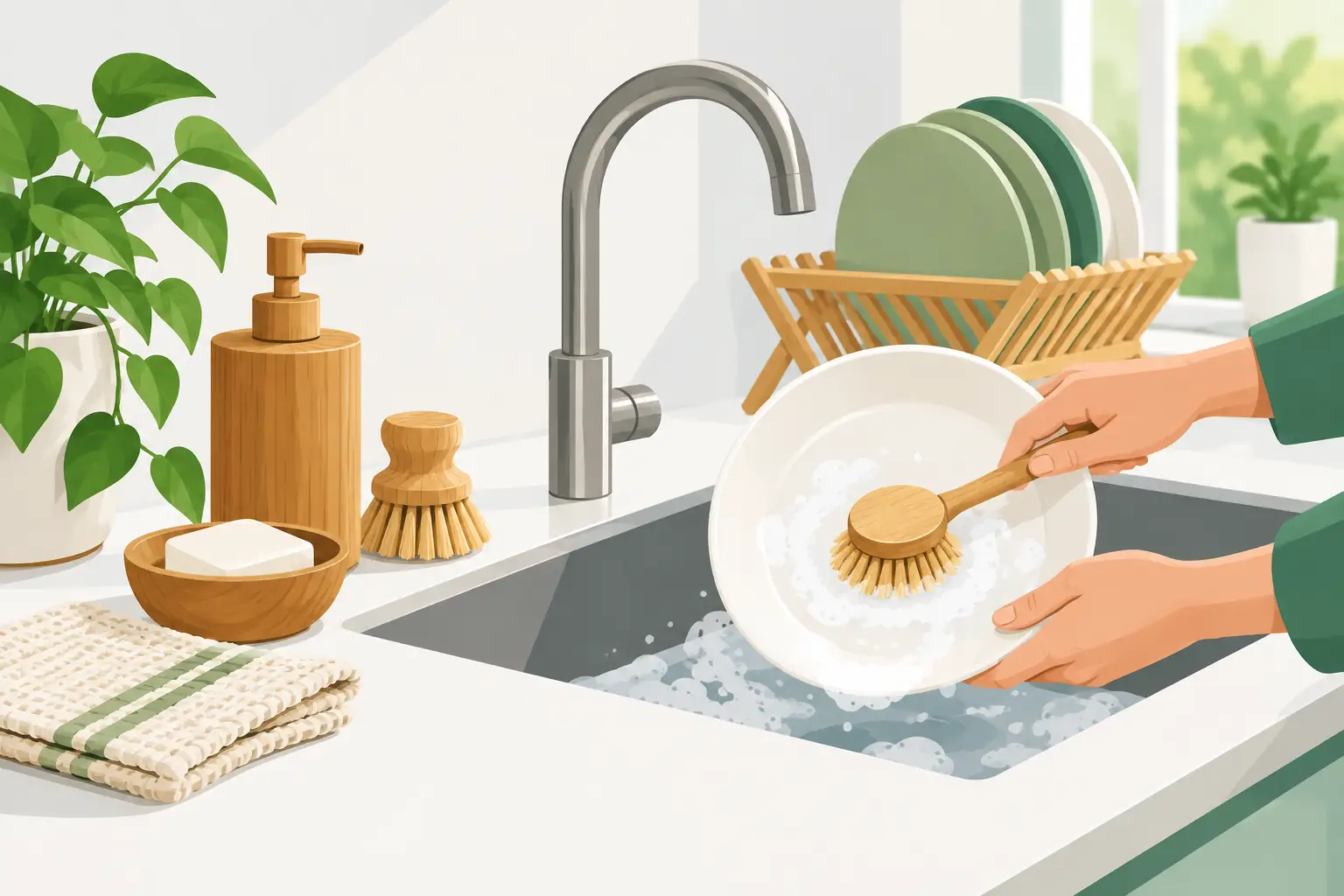
Wet your brush, sponge or cloth first, then rub it over the top of the bar until it is lightly coated. Work up a lather in the washing-up water or directly on the item. For a full sink, refresh the brush against the bar when the suds begin to fade.
Avoid leaving the bar sitting in a pool of water. A draining soap dish, raised tray or simple dry spot beside the sink will help it stay firm and last longer. This small detail makes a noticeable difference.
For stubborn residue, let hot water do some of the work. Soaking is not wasted time. It softens food, reduces scrubbing and means you need less soap overall.
Choose tools that can be used, reused and replaced thoughtfully
The dish soap is only one part of plastic free dish cleaning. Many kitchens are filled with disposable synthetic sponges that shed, wear out quickly and are difficult to recycle. Replacing them need not mean buying a whole new set of specialist tools.
A wooden-handled dish brush with replaceable natural-fibre heads is a practical long-term choice. Look for a head firm enough for pans but gentle enough for everyday crockery. A softer natural-fibre brush can suit glasses, while a dedicated pot brush is useful if you regularly cook from scratch.
For wiping surfaces and washing lighter items, washable cotton cloths are often enough. Keep a small rotation so one can be in the wash while another is at the sink. A natural loofah or cellulose sponge can also work well, though its lifespan depends on how often it is used and how carefully it is dried.
Natural materials are not automatically better in every situation. A well-made reusable synthetic scourer that lasts for years may create less waste than repeatedly replacing a poorly made natural sponge. The useful question is not simply, “Is this plastic-free?” but “Will I use this for a long time, and can I care for it properly?”
Make the change without making washing up harder
The easiest swaps are the ones that fit your existing rhythm. Keep the dish soap where the bottle used to live. Put your brush on a holder that lets it dry. If your household shares washing up, show everyone how much soap they need – usually less than expected.
Start by using up what you already own. Throwing away a half-full bottle simply to begin again is rarely the most thoughtful choice. Once it is finished, repurpose the bottle for diluted household cleaner if it is suitable, recycle it where accepted, then choose a refillable or plastic-free replacement.
Water temperature matters as well. Warm water helps loosen oils and food, but it does not need to be scalding for every load. Save hotter water and longer soaking for greasy cookware. Washing plates soon after eating also prevents residue from drying on, which makes the whole task quicker.
If you use a dishwasher, plastic-free dish cleaning can still have a place. A solid soap bar is excellent for the items you wash by hand, from a wooden spoon to the roasting pan that will not fit. The goal is not perfection. It is a lower-waste kitchen that works for your household.
Keep your sink area clean and your tools fresh
Reusable tools need care, otherwise they can begin to smell or lose their effectiveness. Rinse brushes and cloths thoroughly after use, shake off excess water and let them dry in the open air. Do not leave them submerged in the bottom of the sink.
Wash dishcloths regularly at a suitable temperature, especially after handling raw food spills. Replace brush heads when the fibres are flattened or no longer clean effectively. A tool does not need to look brand new to be useful, but it should still be hygienic and pleasant to use.
Your soap dish deserves attention too. Rinse away softened soap now and then and allow it to dry. A clean, draining surface protects the bar and keeps the sink area looking calm rather than cluttered.
What to expect in the first few weeks
Switching from liquid to solid dish soap can feel unfamiliar at first. You may expect a huge pile of bubbles, because many of us have been taught that foam equals cleaning power. It does not. What matters is whether the soap lifts grease and food so they can be rinsed away.
You may also need to adjust how you tackle pans. Instead of adding another squeeze of liquid, soak, scrub with a good brush and repeat if needed. This is a slower approach for the toughest jobs, but it is also gentler on your tools and more intentional with what you use.
The reward is a kitchen routine with less packaging, fewer disposable purchases and a little more care built into an ordinary task. There is luxury in that kind of usefulness: a beautiful bar at the sink, a clean plate in your hand, and less waste left behind when the day is done.
Begin with the next bottle you finish. A small change at the sink can become one of the most dependable ways to make your home feel both considered and lived in.