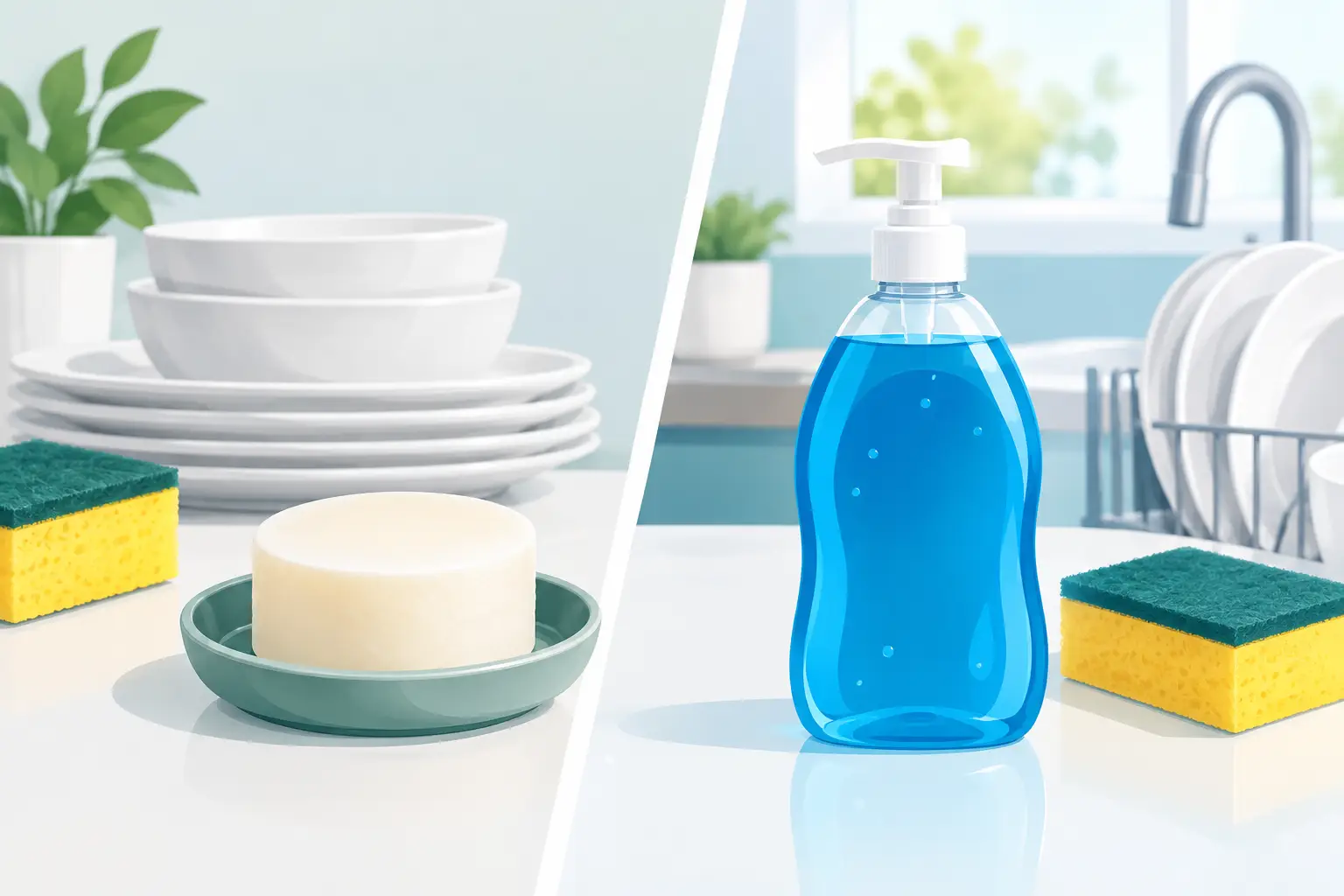


A washing-up liquid bottle is easy to overlook until it is empty again. Then there is the plastic lid, the diluted formula, the space beneath the sink and another replacement to buy. Solid homecare offers a more considered alternative: concentrated household essentials that work hard, last well and leave less behind.
For a lower-waste kitchen, the change does not need to be complicated. A good solid dish soap, a durable brush and a little care in how the bar is stored can make everyday washing-up feel simpler, not stricter. The aim is not perfection. It is a home routine built around products that earn their place.
What solid homecare means in practice
Solid homecare is a category rather than one single product. It includes concentrated bars and powders designed for household jobs that are often sold in plastic bottles: dish soap, surface cleaners, laundry products and stain treatments. In the kitchen, a solid dish soap is usually the most natural place to begin because it replaces a product most households use every day.
The practical appeal is clear. Water does not need to be transported around in a bottle, packaging can be kept to a minimum, and a firm bar can last a long time when it is allowed to dry between uses. There is also something quietly satisfying about using only what you need. Load a brush or cloth with soap, wash up, rinse, and put the bar back where it can air.
That said, solid does not automatically mean better. A bar still needs thoughtful ingredients, effective performance and packaging that matches its low-waste promise. It should also suit the task. A delicate hand soap may be beautiful at the basin but is not necessarily made to tackle frying-pan residue.
Why a solid dish soap can work so well
Washing-up is a simple chemistry problem. Food oils need to be lifted from plates and pans so they can be rinsed away with water. Traditional soap does this through cleansing molecules that bind to both oil and water. With warm water, a well-made dish bar can create a rich lather and cut through everyday grease without a plastic pump bottle on the side.
A tallow-based bar brings a particularly practical quality to the kitchen. Tallow creates a firm, long-lasting soap with a creamy lather. When responsibly sourced, it also makes use of an ingredient that might otherwise be wasted. At Luna Natural Soap Co., tallow is slowly rendered in-house from locally sourced, grass-fed fat, allowing every bar to begin with close attention to purity and traceability.
The bar format is concentrated, which is why it can feel different at first. Bottled washing-up liquid is ready to pour, while a dish bar asks you to create lather with a wet brush, sponge or cloth. After a few uses, that extra moment tends to become part of the rhythm. You can control how much soap is on the brush, rather than adding a generous squirt by habit.
For heavily baked-on food, the bar is not a shortcut around soaking. Let the pan sit in hot water first, then use the soapy brush to loosen what remains. This is not a weakness of solid soap so much as a reminder that the right technique matters as much as the product.
The small details that make the swap last
The lifespan of a solid dish soap depends less on the size of the bar than on whether it spends its days sitting in water. A soggy bar disappears quickly. Keep it on a ridged soap dish, draining tray or dry ledge beside the sink so air can reach all sides.
Use a natural-fibre dish brush, a washable scrubber or a dedicated kitchen cloth to build lather directly from the bar. Avoid leaving the brush pressed on top after washing-up. A quick rinse and an upright rest will help both tools dry properly.
If your water is very hard, you may find that more rinsing is needed, especially on glasses. This varies by area and water supply. The answer is usually to use a little less soap, work with warmer water and rinse thoroughly rather than abandoning the bar after a single attempt.
Choosing solid homecare with care
A lower-waste product should not ask you to compromise on the basics. Look first at what it is designed to clean. A solid dish soap should be firm enough for daily use, capable of producing useful lather and made for grease rather than only light rinsing.
Ingredients matter, particularly if you spend a lot of time with your hands in washing-up water. Fragrance can make a kitchen feel fresh, but it is a personal choice. For sensitive or easily irritated hands, a simply formulated option or wearing washing-up gloves may be the more comfortable route. Natural ingredients are not automatically suitable for every person, so it is sensible to pay attention to how your skin responds.
Packaging deserves the same scrutiny. A bar wrapped in paper or sold without unnecessary plastic is a clear step forward, but low-waste living also means using what you already own. There is no need to replace a perfectly good sponge holder simply because you have chosen a solid soap. Adapt your existing kitchen set-up first.
Finally, consider provenance. Household staples are used often, and the story behind them matters. Small-batch makers who can explain where their ingredients come from, how their soap is made and why they have chosen a particular material offer something more valuable than a vague green claim. Traditional methods can be practical, not nostalgic: they give makers control over the quality, texture and performance of each batch.
A realistic route to a lower-waste kitchen
The most sustainable routine is the one you will keep using. Start with the item that runs out most often, rather than attempting to transform every cupboard at once. For many homes, that is bottled washing-up liquid.
Give the replacement time. The first few washes may feel unfamiliar, particularly if you are used to pouring liquid directly into a sink of water. Try loading the brush from the bar and washing items under a light flow of warm water. This method is often more economical because the soap goes where it is needed instead of dispersing through a full bowl.
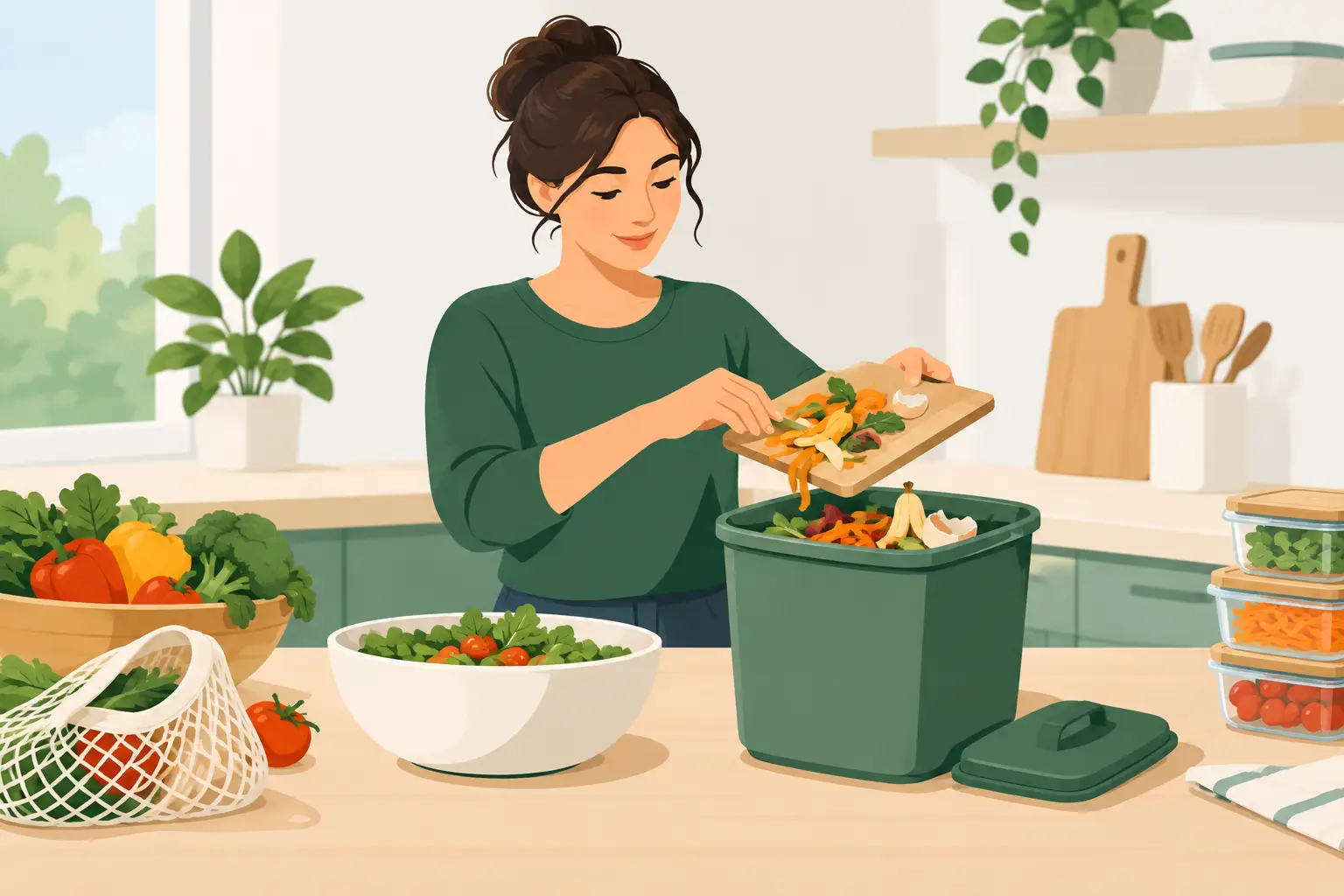
Then look at the supporting habits. Reuse jars for food storage, keep a washable cloth in rotation and choose refills only where they genuinely reduce waste in your household. There is no prize for owning an entire collection of eco products. Buying fewer, better-made essentials and using them fully is usually the more thoughtful choice.
Solid homecare is about use, not just packaging
It is tempting to measure sustainable choices by what can be photographed: the paper wrap, the wooden brush, the tidy shelf. But the greater value of solid homecare lies in daily use. A bar that lasts, cleans properly and does not create another bottle to discard changes a routine that happens several times a day.
There are trade-offs. Solid products need dry storage, some formulas suit particular water types better than others, and a liquid may still be useful for a specific task or mobility need. Convenience matters. A considered home is not one that follows rules rigidly, but one where each choice is useful, honest and manageable.
Begin with the corner of the sink. Make room for one firm bar, let it dry well, and allow a small practical ritual to do its work. The kitchen will still need cleaning tomorrow, but it can ask a little less of the planet each time.