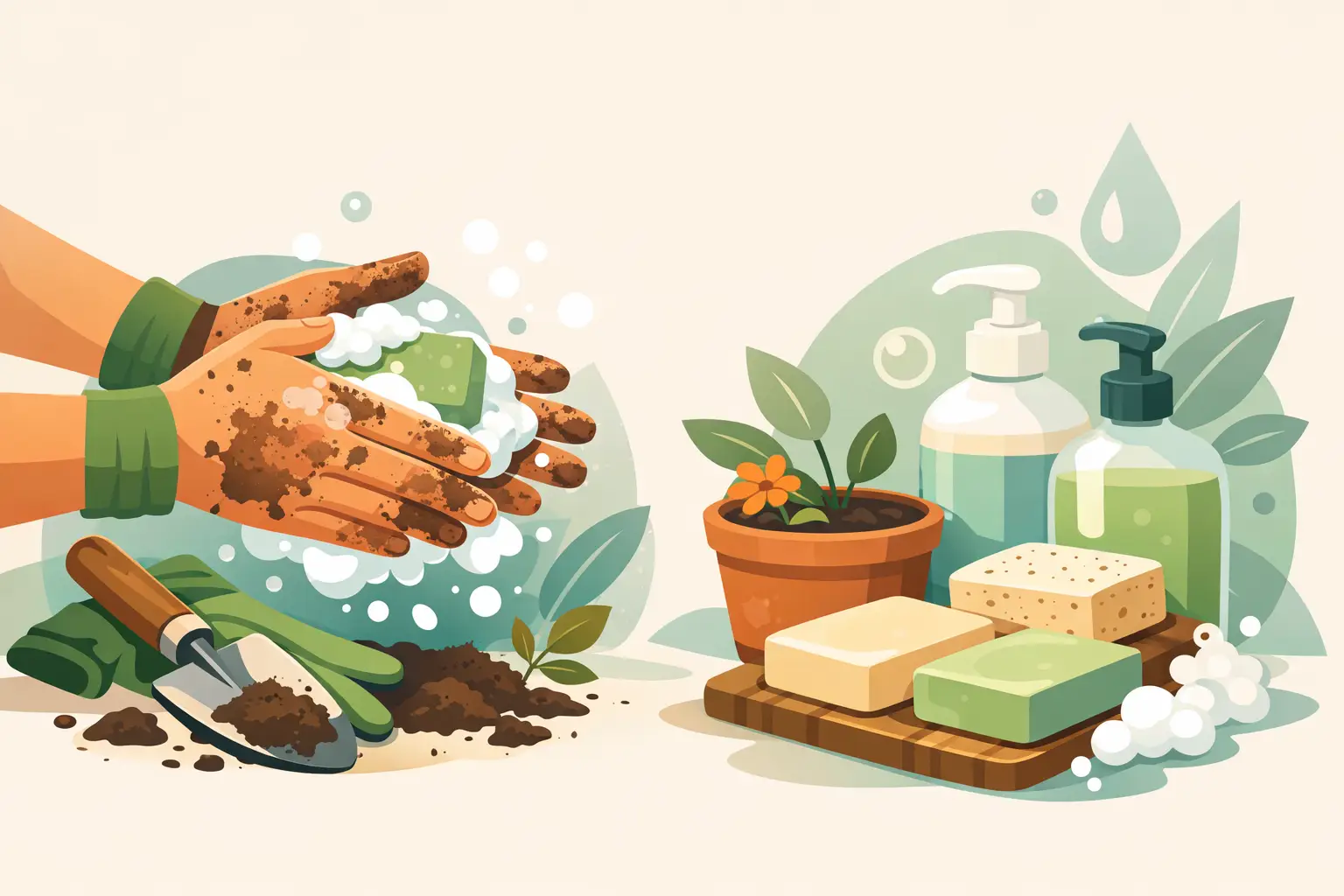


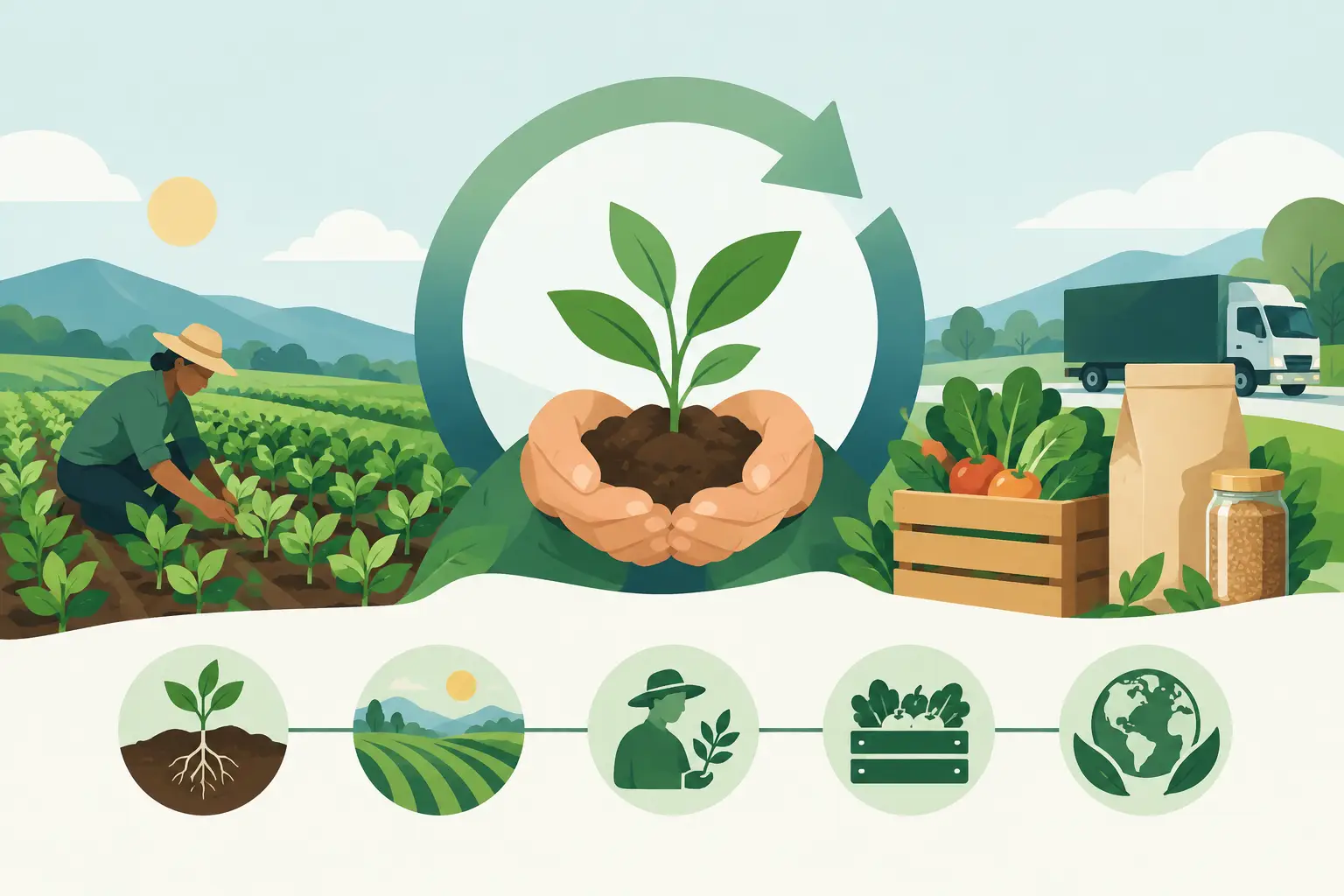
A bar of soap begins long before oils are measured, botanicals are chosen or a mould is filled. It begins in the soil, with the animals, and with the people who care for both. Regenerative sourcing examples help make that beginning visible. They show that an ingredient can be more than natural: it can come from a system designed to leave land, communities and materials in better health.
For skincare, this matters because every ingredient has a story. A beautifully wrapped bar is only part of it. How its fats were raised, how its plants were grown, how far materials travelled and what happens to the offcuts all shape its true footprint. Better sourcing is not a marketing flourish. It is a practical choice that affects quality, traceability and the kind of future a business helps support.
What regenerative sourcing really means
Regenerative sourcing means buying materials from farming and production systems that actively restore rather than simply reduce harm. The aim is healthier soils, improved biodiversity, better water cycles and more resilient farms. It also asks for fair, lasting relationships with the people producing those materials.
This is different from a vague promise of sustainability. Sustainable practices may seek to maintain the status quo or limit damage. Regenerative practices seek improvement over time. On a farm, that might mean using grazing patterns that give pasture time to recover, planting diverse crops, protecting hedgerows or building soil organic matter through careful land management.
The word deserves care. No single certificate, pastoral image or local postcode proves that a supply chain is regenerative. Farms vary, seasons vary, and meaningful change takes time. The strongest claims are supported by clear knowledge of where an ingredient comes from, how it is produced and what the supplier is working towards.
Regenerative sourcing examples in everyday skincare
The most useful regenerative sourcing examples are not abstract. They can be seen in everyday decisions about fats, herbs, packaging and production. Each choice has limits, but together they create a more considered product.
Tallow from responsibly managed, grass-fed farms
Tallow is a traditional skincare ingredient made from rendered beef fat. When it comes from grass-fed animals raised on well-managed pasture, its sourcing can support a more circular use of the animal. Rather than allowing a valuable by-product to go to waste, it is carefully transformed into an ingredient for soap and skincare.
Pasture-based farming is not automatically regenerative, and it should never be treated as a blanket claim. The detail matters. Are animals moved in a way that prevents overgrazing? Is the land given time to rest? Are farmers protecting soil cover and wildlife habitats? A maker who knows their farming partners can ask better questions than one buying anonymous commodity fats.
For a tallow soapmaker, rendering in-house adds another layer of care. It allows close attention to purity and process, while keeping a useful material in circulation. At Luna Natural Soap Co., slow-rendered local tallow is chosen not because it is fashionable, but because it honours a time-tested ingredient and gives the maker a clearer connection to its origin.
Botanicals grown with soil in mind
Herbs such as mint, calendula, chamomile and lavender bring scent, colour and skin-loving character to a bar. Yet plant ingredients can carry a surprisingly complex footprint when they are grown in monocultures, treated heavily or shipped long distances without traceability.
A regenerative approach may favour growers who rotate crops, avoid damaging chemical inputs, compost plant matter and create space for pollinators. It may also mean choosing seasonal, locally grown botanicals where possible, rather than insisting on an ingredient that only thrives thousands of miles away.
Local is not always the lowest-impact answer. A nearby crop grown in a heated greenhouse, for example, may have a different footprint from a field-grown crop from elsewhere. Still, buying from known growers can make it easier to understand cultivation methods, support rural livelihoods and use ingredients at their freshest.
Using every workable part of a batch
Regeneration is also about materials already within reach. Soap ends are a simple but powerful example. During cutting and finishing, small pieces can be created that are every bit as good as the full bar, just less uniform. Reworking or offering them as a zero-waste option keeps quality soap in use rather than treating it as waste.
This is not merely thrift. It challenges the idea that perfection must look identical. A collection of soap ends can be practical, generous and full of character, especially for households that care more about a rich lather and gentle cleanse than a perfectly squared edge.
The same principle applies in production: accurate batching, sensible stock planning and choosing durable tools can reduce avoidable loss. Small-batch making will always involve some variation. The aim is not a waste-free fantasy, but thoughtful use of what has already taken energy, care and resources to produce.
Plastic-free packaging designed for the real world
Packaging is often the first sustainability cue a customer sees, but it works best when paired with responsible sourcing rather than used as a substitute for it. A plastic-free wrap or recyclable paper box can reduce reliance on single-use plastics, particularly for a product like soap that does not require a plastic bottle.
The practical question is whether the packaging protects the bar through storage and delivery without adding unnecessary layers. A damaged product has its own cost. Good packaging uses as little as necessary, clearly suits the product and is straightforward for customers to dispose of through the systems available to them.
Buying through relationships, not just specifications
A supplier spreadsheet can tell a business the price, volume and delivery date. It cannot always reveal whether a farmer is being paid fairly enough to care for their land over the long term. Regenerative sourcing depends on relationships that make room for conversation, consistency and mutual respect.
That might look like paying a realistic price for high-quality fats, accepting natural variation in botanicals, planning orders early or choosing suppliers close enough to visit. These decisions can cost more than buying the cheapest available ingredient. They can also build a supply chain with greater trust and better knowledge behind it.
What to look for when choosing a better-made bar
You do not need to interrogate every maker or become an expert in agricultural systems before buying soap. A few clear questions will help separate genuine care from broad, comforting language.
Look for specificity. Does the maker say where their key ingredients come from? Can they explain why they use tallow, plant oils or botanicals, rather than simply calling them clean or natural? Are they open about their process, including how they reduce offcuts and what packaging they use?
Then look for proportion. A brand may use one regenerative ingredient while relying on a less transparent supply chain for everything else. That does not make the effort meaningless, but it does mean the claim should be modest. Honest makers explain what they are doing now and where they are still improving.
Finally, consider performance. Ethical sourcing and a lovely bar should not be competing ideas. For dry or sensitive skin, a firm, well-cured soap with a creamy lather and thoughtfully chosen ingredients can make daily cleansing feel more comfortable. A product should earn its place in your bathroom through use, not just through its story.
Why small choices can travel further
No bar of soap can repair an entire food system on its own. Nor should customers be asked to carry the full burden of change through every purchase. But choosing products made with traceable materials, careful production and less waste sends a useful signal: quality includes how something was made.
The most meaningful choice is often the one you can keep making. Use the bar to the end. Choose a maker willing to explain their ingredients. Let the ordinary act of washing your hands be a small vote for soil cared for, materials respected and real skin treated gently.