

If your skin feels tight the moment you rinse off, you already know the problem with a lot of modern cleansing. You can start the shower with calm skin and step out feeling squeaky, stripped, and a bit cross. For many people with dryness, sensitivity, or eczema-prone patches, that tight after-wash feeling is not “clean”. It is your barrier asking for a break.
That is where tallow soap earns its place. Not as a trend, and not as a miracle, but as a traditional, straightforward bar that cleans without picking a fight with your skin.
Tallow soap benefits for skin – what people actually notice
The most consistent feedback from tallow soap users is comfort. Not perfume-masking, not “tingly fresh”, just skin that feels normal after washing. The reason is simple: well-made tallow soap tends to be gentle, with a dense, creamy lather and a rinse that leaves skin feeling supported rather than squealed into submission.
The tallow soap benefits for skin usually show up in three places.
First, dryness tends to calm down. A good bar does not need to leave you feeling as though you must moisturise immediately. Many people still will moisturise, of course, but the urgency disappears.
Second, sensitivity often becomes more manageable. When your barrier is already irritated, adding harsh detergents or a long list of potential irritants is rarely helpful. A simple, well-formulated bar can reduce how much your skin has to “process” during a basic wash.
Third, skin texture can look steadier over time. Not because soap is skincare in a jar, but because consistent, non-stripping cleansing is one of the foundations of clear, comfortable skin.
Why tallow is so skin-compatible
Tallow is a traditional soapmaking fat, and there is a reason it has lasted. When properly rendered and formulated into a cold-process bar, it produces a firm soap with a rich, cushioning lather. That lather matters. It changes the feel of cleansing from “scrub and strip” to “lift and rinse”.
Tallow is also naturally rich in fat-soluble vitamins such as A, D, E, and K, and it is often discussed for its similarity to the lipids found in healthy skin. In real-life terms, that can mean a wash that feels less disruptive, especially for people who are prone to dryness.
A quick note on expectations: soap is a wash-off product. You are not applying a concentrated treatment and leaving it on for hours. The main value here is how the soap cleans, what it avoids, and how your skin feels afterwards.
The barrier support angle – gentle cleansing without drama
Your skin barrier is the outer layer that helps keep moisture in and irritants out. When it is compromised, almost everything feels too much: hot water, fragrance, foaming cleansers, even “gentle” products if they contain ingredients your skin dislikes.
A tallow-based bar, made with care, tends to cleanse in a way that feels less aggressive. You are still removing sweat, daily grime, and residue. You are just doing it with a different kind of lather and a different post-wash feel.
This is why tallow soap often appeals to:
People with dry skin that feels papery or tight after washing, especially in winter.
Those with sensitive or reactive skin who want fewer variables in their routine.
Families who need a practical, no-fuss bar that suits multiple skin types without the bathroom filling up with plastic.
Hydration and comfort – what “moisturising soap” really means
Soap cannot hydrate in the way a leave-on moisturiser does, but it can support hydration by not stripping the skin’s natural oils to the same extent as harsher cleansing options.
When people say a tallow bar feels “moisturising”, they usually mean one of two things.
They mean the skin does not feel tight after rinsing.
They mean the surface of the skin feels softer and more flexible, even before they apply any lotion.
That feeling is often tied to the fatty acid profile of the soap and the formulation choice known as superfatting (leaving a small amount of oils un-saponified in the finished bar). This is normal in artisan soapmaking and can make a bar feel more forgiving on dry, delicate skin.
A calmer option for eczema-prone and reactive skin (with caveats)
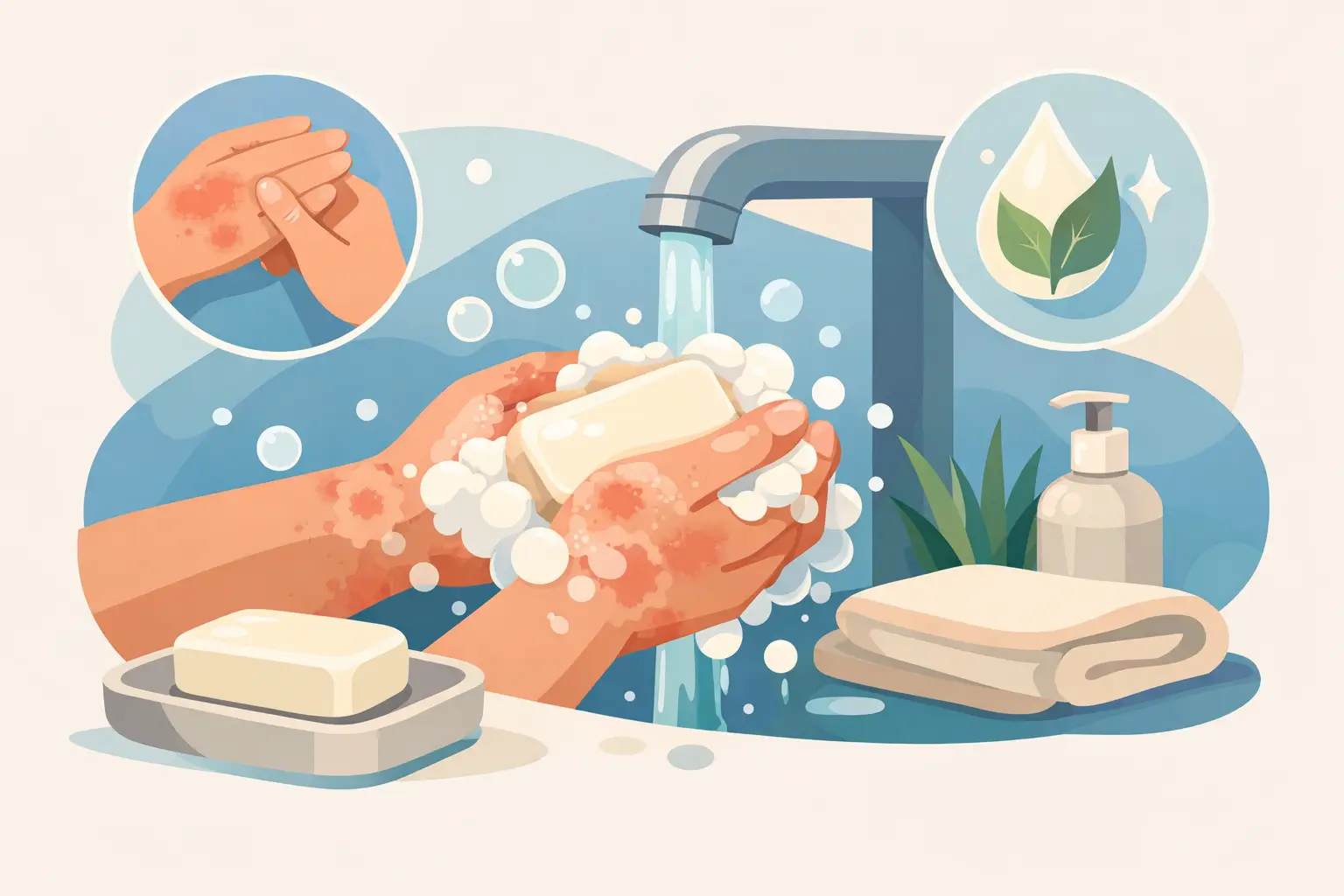
Many people looking up tallow soap benefits for skin are doing so because their skin is not “normal”. It is eczema-prone, easily inflamed, or prone to flare-ups with the wrong product.
A simple tallow bar can be a sensible swap because it often avoids common troublemakers like strong synthetic detergents and overcomplicated ingredient lists. That said, “natural” does not automatically mean “non-irritating”. Essential oils, botanicals, and even some natural exfoliants can be too much during a flare.
If your skin is currently angry, choose the simplest bar you can, keep water lukewarm, and patch test. And if you are under medical care for eczema or dermatitis, keep your clinician’s advice at the centre of your routine. Soap can support comfort, but it is not a substitute for treatment.
What about acne or oily skin?
Tallow soap is often associated with dry and sensitive skin, but it can work for oily or combination skin too, especially if your current cleanser is over-stripping. When oily skin is repeatedly stripped, it can feel tight and still look shiny, which is a frustrating combination.
The “it depends” here comes down to the rest of the formula and your habits. If you wear heavy makeup or water-resistant SPF, you may need an oil cleanse first or a dedicated makeup-removing step, because a gentle bar may not remove everything in one pass. If you are acne-prone, you may also do better with a simpler, unscented bar rather than one packed with fragrant essential oils.
The often-overlooked benefit: a bar that lasts and wastes less
Skin benefits are the headline, but there is a practical advantage that matters in real homes: a well-made tallow bar is typically hard and long-lasting. You use less product over time, you store it easily, and you are not paying for water and plastic packaging.
If you are trying to reduce waste in the bathroom without sacrificing the feel of a premium wash, a dense artisan bar makes the switch easier. It is indulgent in the shower, then quietly sensible on the sink.
How to choose a tallow soap that actually performs
Not all tallow soaps are equal. If you want the best chance of getting the comfort people talk about, look for a bar that is transparent about sourcing and process, and that keeps the ingredient list purposeful.
Start with the fat quality. Grass-fed tallow is often favoured for its purity and consistency. Then consider fragrance. If you are sensitive, go unscented or lightly scented. Finally, pay attention to cure time and method. Cold-process soap needs time to cure properly. A well-cured bar is harder, milder, and generally more pleasant to use.
One brand example that fits this traditional, traceable approach is Luna Natural Soap Co., known for small-batch cold-process tallow bars, in-house slow-rendered tallow, and plastic-free packaging.
Getting the best results – small changes that matter
If you try tallow soap and want it to feel as good as possible, treat it like a premium product rather than a cheap bar left in a puddle.
Use lukewarm water instead of very hot. Hot water can undo the gentleness of even the nicest soap.
Lather in your hands or on a cloth first, then apply the lather to skin. Directly scrubbing the bar on very dry areas can be too much for some people.
Let the bar dry between uses on a draining soap dish. This keeps it firm and helps it last.
If you are washing hands frequently, follow up with a simple hand cream when you can. A gentle soap reduces damage, but constant washing is still constant washing.
When tallow soap might not be the right fit
There are a few scenarios where you may want to be cautious.
If you are strictly vegan, tallow is an animal-derived ingredient, so it will not align with your values.
If you are highly fragrance-reactive, scented bars can still trigger irritation even if the base is gentle. Choose fragrance-free.
If you have very hard water, any true soap can leave a little residue sometimes called soap scum. This is not harmful, but it can feel less pleasant. A quick rinse and occasional wipe of shower surfaces usually solves it, and using a washcloth can help.
The quiet luxury of a bar that respects your skin
Tallow soap is not exciting in the way a new serum launch is exciting. It is better than that. It is reliable. The best bars make cleansing feel like a reset rather than a challenge, and they suit the kind of routines real people keep – quick showers, busy mornings, children at the sink, winter skin that needs extra kindness.
If your skin has been asking for less, a well-made tallow bar is a practical way to listen – and to make daily washing feel comfortable again.