

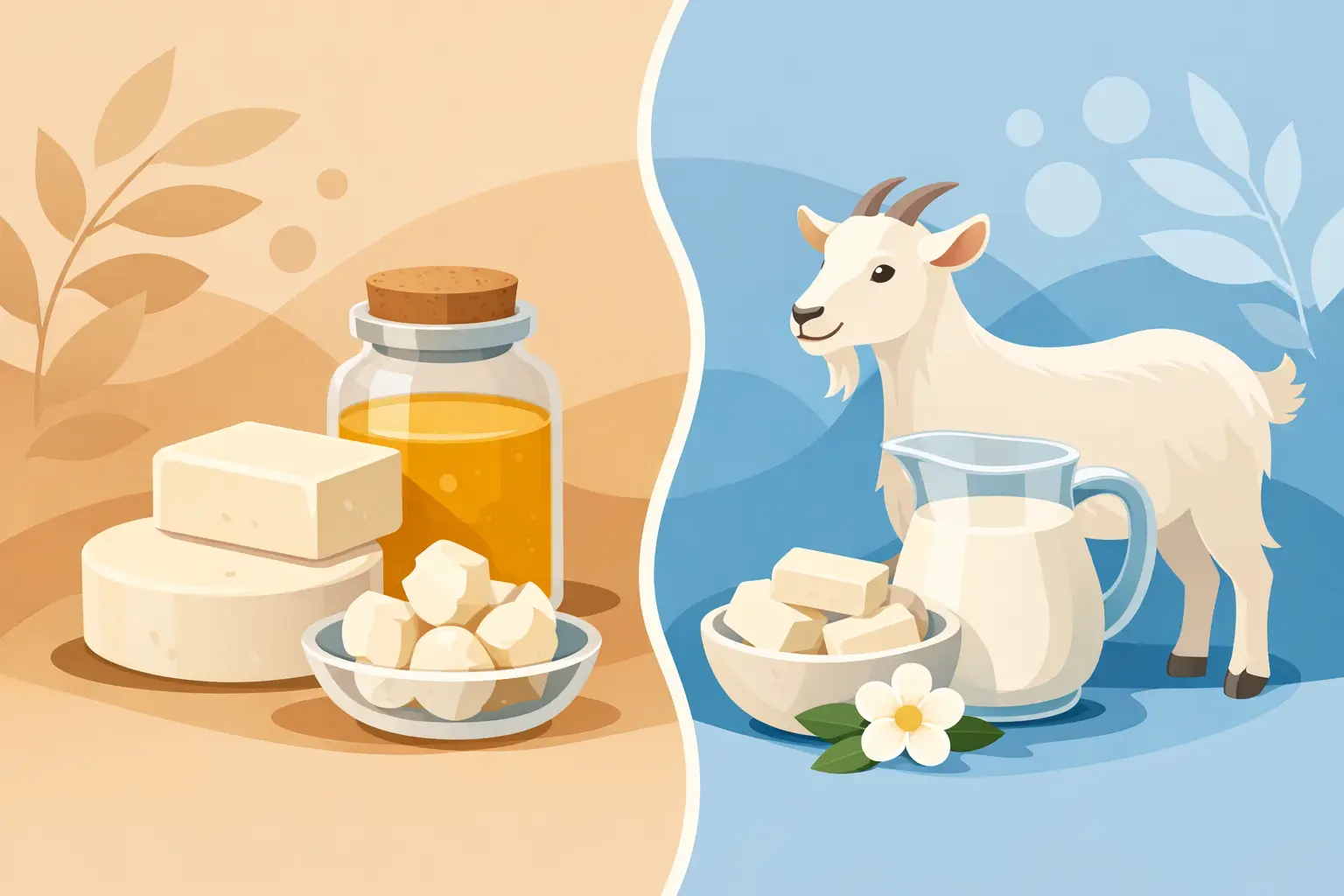
If your skin feels tight after washing, the question is rarely whether you need soap. It is what kind. In the tallow soap vs goat milk debate, the real difference is not which one sounds more wholesome on a label, but how each bar behaves on skin that is dry, sensitive, easily irritated, or simply tired of harsh cleansing.
Both have earned loyal followings for good reason. Both can be beautifully made. And both can be disappointing if the full formula is poor. That is the part often missed. A bar is never just one hero ingredient. It is the balance of fats, the soapmaking method, the cure time, and whether the maker understands what real skin needs day after day.
Tallow soap vs goat milk: what is the actual difference?
Tallow soap is made with rendered animal fat, most often beef tallow, which is then saponified with lye and combined with other oils or butters depending on the recipe. A well-made tallow bar is known for a firm texture, a creamy lather, and a skin feel that many people describe as comforting rather than stripping.
Goat milk soap, on the other hand, refers to soap that includes goat milk as part of the liquid in the recipe. The fats in the bar may still come from olive oil, coconut oil, shea butter, tallow, or other ingredients. Goat milk is not usually the main fat. It is an added ingredient that contributes milk sugars, proteins, and a softer, silkier feel in use.
So the comparison is not perfectly like for like. Tallow is usually a base fat. Goat milk is usually a supporting ingredient. That matters, because their roles in a formula are different from the start.
Why tallow soap feels different on dry or sensitive skin
Tallow has a long history in traditional soapmaking because it creates a balanced bar. It is hard enough to last well, gentle enough for frequent use, and rich enough to produce a dense, creamy lather rather than an airy foam that disappears too quickly.
For dry or sensitive skin, that texture matters. A creamy lather tends to feel more cushioning on the skin. Tallow is also valued for being highly compatible with the skin barrier, partly because its fatty acid profile is closer to our own skin oils than many trendy plant alternatives. That does not mean every tallow soap is automatically suitable for reactive skin, but it helps explain why many people find it less disrupting.
A carefully formulated tallow bar can cleanse without that squeaky, over-cleansed finish. For anyone managing eczema-prone patches, winter dryness, or skin that flares when routines get too complicated, that gentler after-feel is often the main reason they stay with it.
Where goat milk soap shines
Goat milk soap is popular for a reason. It often feels soft, comforting, and a touch more indulgent in the shower or at the basin. The natural sugars in the milk can help boost lather, giving the bar a creamier, more luxurious feel. Many users also like the idea of milk proteins and naturally occurring compounds adding to the skin-loving profile of the soap.
If your skin is mildly dry, if you enjoy a more pampering wash, or if you simply prefer bars that feel silky and smooth, goat milk soap can be a lovely choice. It is especially appealing to people easing away from conventional body washes and wanting a bar that feels gentle but familiar.
That said, goat milk is not a magic fix for every skin concern. If the rest of the formula is heavy in cleansing oils that can feel drying, the milk alone will not cancel that out. A goat milk bar can still leave skin tight if the overall recipe is not balanced.
Tallow soap vs goat milk for eczema-prone skin
This is where nuance matters most. There is no single bar that suits every person with eczema-prone skin, because triggers vary. Fragrance, essential oils, over-washing, hard water, and even stress can all play a part.
Still, if you are choosing between the two, tallow soap often has an edge for those who need steady, barrier-conscious cleansing. A well-cured tallow bar made with a simple ingredient list can be deeply reassuring for skin that does not tolerate much experimentation. It tends to be firm, mild, and dependable.
Goat milk soap can also work well for eczema-prone skin, particularly if the formula is unscented and low in potential irritants. Some people love the added creaminess and find it very soothing. Others prefer the plainer, more traditional simplicity of a tallow-based bar.
In practice, the better question is this: is the soap lightly formulated, well cured, and free from ingredients your skin already dislikes? That usually tells you more than the headline ingredient alone.
What to check beyond the label
When people compare tallow soap and goat milk soap, they often stop at the front of the pack. The back matters more.
Look at the full ingredient list. If coconut oil appears high in the formula, the bar may cleanse more aggressively, even if it contains beautiful additions like goat milk or botanicals. If fragrance is strong, sensitive skin may object regardless of how nourishing the base sounds. If the soap is made in a rushed way and sold too fresh, it can feel harsher than a properly cured artisan bar.
Traditional cold-process soapmaking makes a difference here. Slow curing allows excess water to evaporate and the bar to harden fully, which improves both longevity and skin feel. Careful formulation matters just as much. This is why handcrafted soap can feel worlds apart from mass-produced bars, even when the ingredient names appear similar.
Which bar lasts longer?
Tallow soap usually has the advantage. Because tallow creates a hard, durable bar, it tends to last well in daily use, especially if it is properly cured and stored on a draining dish between washes. That makes it practical as well as luxurious.
Goat milk soap can also last nicely, but much depends on the fats used alongside the milk. Some goat milk bars are wonderfully firm. Others soften more quickly in a steamy shower or become mushy if left sitting in water.
If you are trying to reduce waste and buy fewer, better bars, longevity is worth considering. A soap that disappears in a fortnight is rarely the most sustainable option, however lovely it smells.
Tallow soap vs goat milk for face and body
For body use, both can work beautifully. The choice often comes down to preference. If you want a rich, substantial bar with a calm, clean finish, tallow soap is a strong choice. If you want a softer, creamier wash with a slightly more indulgent feel, goat milk may appeal more.
For facial use, caution is sensible with either option. Facial skin is often more reactive, and not every body soap belongs on the face. A simple, unscented tallow bar can suit some people very well, particularly those with dry skin who dislike foaming cleansers. A mild goat milk bar may also suit some complexions. But if your skin is highly reactive, patch testing is wise, and sometimes less washing is better than changing products repeatedly.
Who should choose tallow soap?
Tallow soap tends to suit people who want fewer ingredients, more tradition, and reliable daily comfort. It is especially appealing if your skin is dry, easily upset, or prone to feeling stripped after cleansing. It also makes sense for households looking for a hard-working bar that lasts well and performs without unnecessary fuss.
At Luna Natural Soap Co., this is exactly why tallow remains at the heart of our soapmaking. Slow-rendered, thoughtfully formulated, and made for real skin, it offers a kind of quiet luxury that does not need exaggeration.
Who should choose goat milk soap?
Goat milk soap makes sense if you love a creamy, pampering lather and want a bar that feels gentle and comforting. It can be a lovely option for normal to dry skin, for gift giving, or for anyone drawn to the softer feel that milk soaps often provide.
It may also be the better fit if you already know your skin gets on well with milk-based products. Some people simply prefer the sensory experience of goat milk soap, and that matters. Daily skincare should feel good to use, not like a compromise.
The better choice depends on your skin, not the trend
There is no need to turn this into a contest with one clear winner. Tallow soap is often the stronger choice for barrier support, firmness, and traditional simplicity. Goat milk soap often wins on softness, silkiness, and a more overtly creamy feel. Both can be excellent. Both can miss the mark if poorly made.
If your skin is dry, sensitive, or frequently unsettled, start with the bar that asks less of it. Look for simple formulas, careful craftsmanship, and ingredients with a clear purpose. Skin rarely responds best to noise. It usually responds best to quiet consistency.