

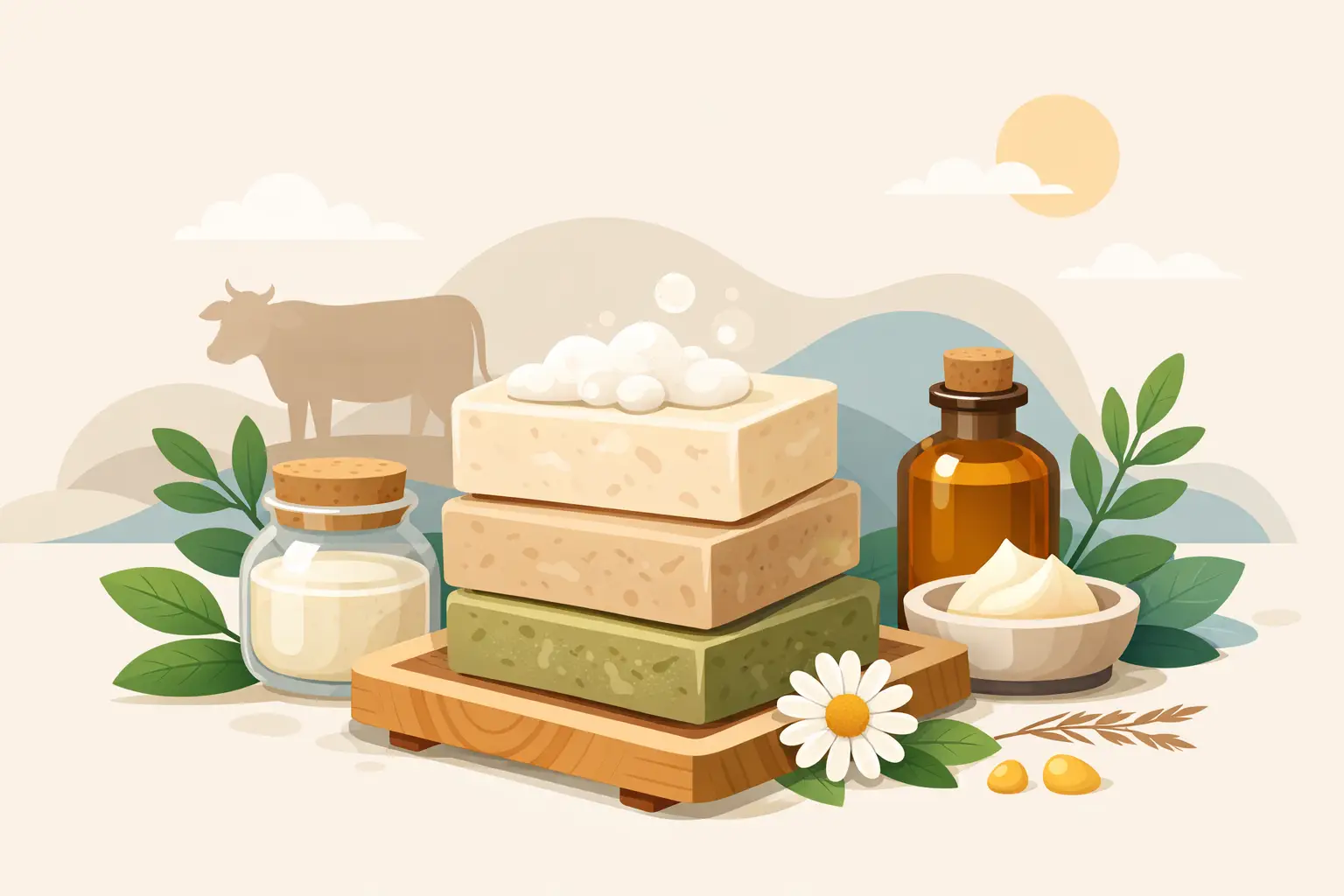
A soap bar tells on itself within the first few uses. If it leaves skin feeling tight, squeaky, or oddly thirsty, no clever label can hide it. Organic tallow soap handmade in small batches tends to do the opposite. It cleans properly, lathers richly, and leaves skin feeling comfortable rather than stripped.
That difference matters, especially if your skin is dry, sensitive, reactive, or simply tired of harsh cleansers dressed up as gentle. Tallow is not a trend ingredient in the usual sense. It is a traditional fat, used in soapmaking for generations because it works. When it is sourced well, rendered with care, and made slowly, it produces a bar that feels both practical and deeply indulgent.
What makes organic tallow soap handmade so effective?
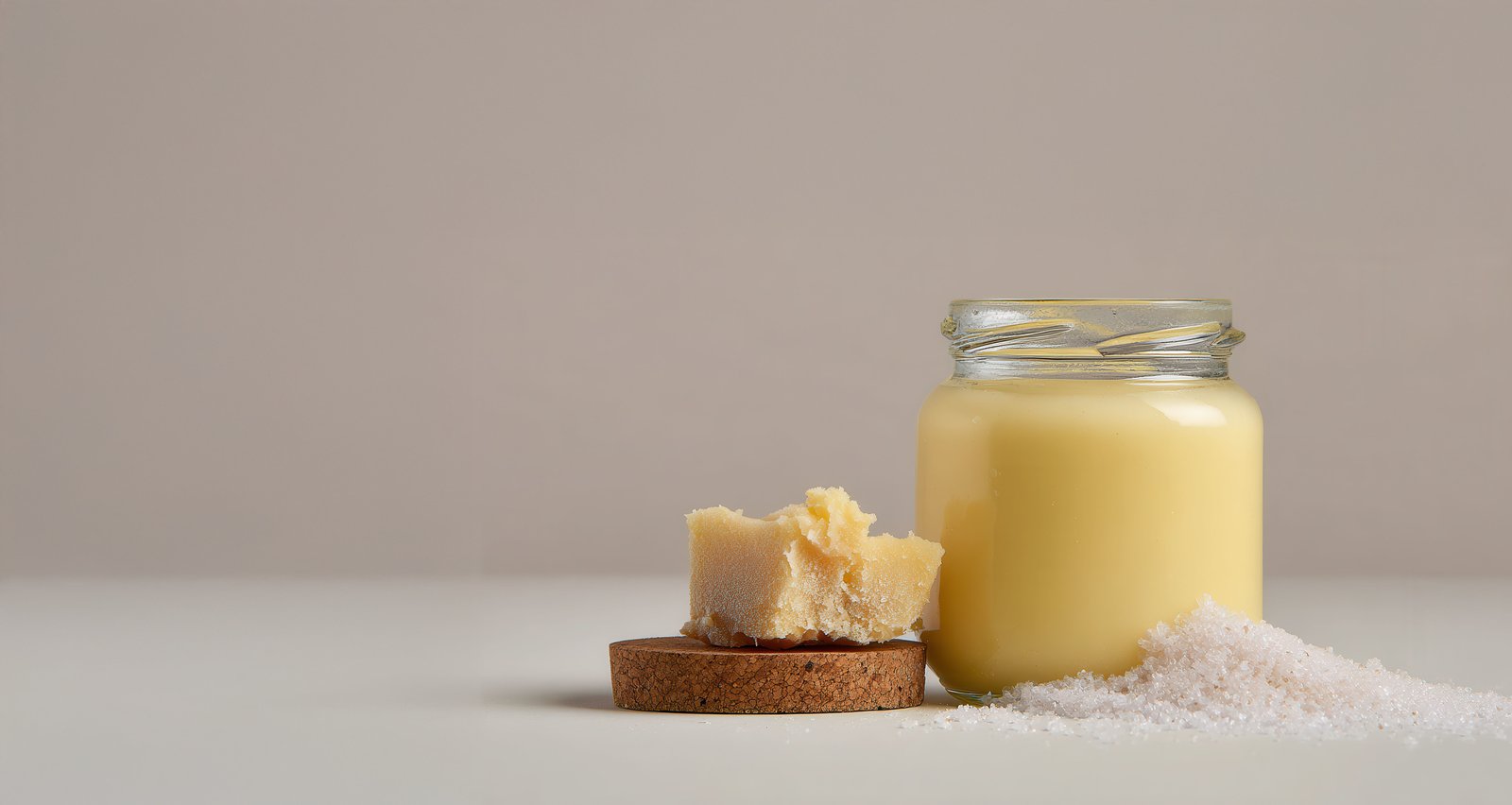
At its simplest, tallow soap is made from rendered animal fat and lye, transformed through saponification into soap. The quality of the original fat matters. So does the method. Organic, grass-fed tallow from well-raised animals tends to be more aligned with the values many natural skincare customers already hold – traceability, responsible farming, and less waste.
Handmade matters for a different reason. In a small-batch process, each stage can be controlled more carefully, from rendering and blending to curing. That means the maker can focus on bar hardness, lather quality, skin feel, and ingredient integrity rather than speed alone. You often get a firmer bar, a more generous cure time, and a simpler formula that does not rely on synthetic detergents or unnecessary fillers.
For skin, the appeal is straightforward. Tallow is naturally rich in fatty acids and contains fat-soluble vitamins including A, D, E and K. In soap, it helps create a creamy, stable lather and a satisfying cleanse without the brittle, over-cleansed feeling some plant-based bars can leave behind. It is not magic, and it will not solve every skin issue on its own, but for many people it is noticeably kinder.
Why tallow feels different on the skin
Not all cleansing bars behave the same way. Some foam quickly and rinse sharply, leaving that almost polished feeling which can seem clean at first but later turns into tightness or irritation. Tallow-based soap often feels more balanced. The lather is dense rather than fluffy, and the finish on the skin is softer.
Part of this comes down to compatibility. Tallow has a fatty acid profile that many people find particularly supportive for the skin barrier. That is why it is often chosen by those dealing with dryness, rough patches, or skin that flares up when exposed to too many fragranced or detergent-heavy products. The bar still cleanses. It simply does so with less drama.
This is also where handmade production has an advantage. A well-formulated cold-process bar retains naturally occurring glycerine, which helps draw moisture to the skin. In mass production, glycerine is often removed for use elsewhere. In traditional soapmaking, it stays in the bar where it belongs.
Organic tallow soap handmade for sensitive and troubled skin
If you have sensitive skin, your best soap is rarely the loudest one. It is usually the bar with the fewest points of friction – no harsh surfactants, no overloaded perfume, no complicated ingredient list trying to do too much.
That is why organic tallow soap handmade bars are often chosen for real-world skin concerns. Dry skin, eczema-prone skin, and reactive skin tend to prefer consistency. A simple, well-cured bar with nourishing oils and a calm scent profile can be far more useful than a product full of fashionable actives.
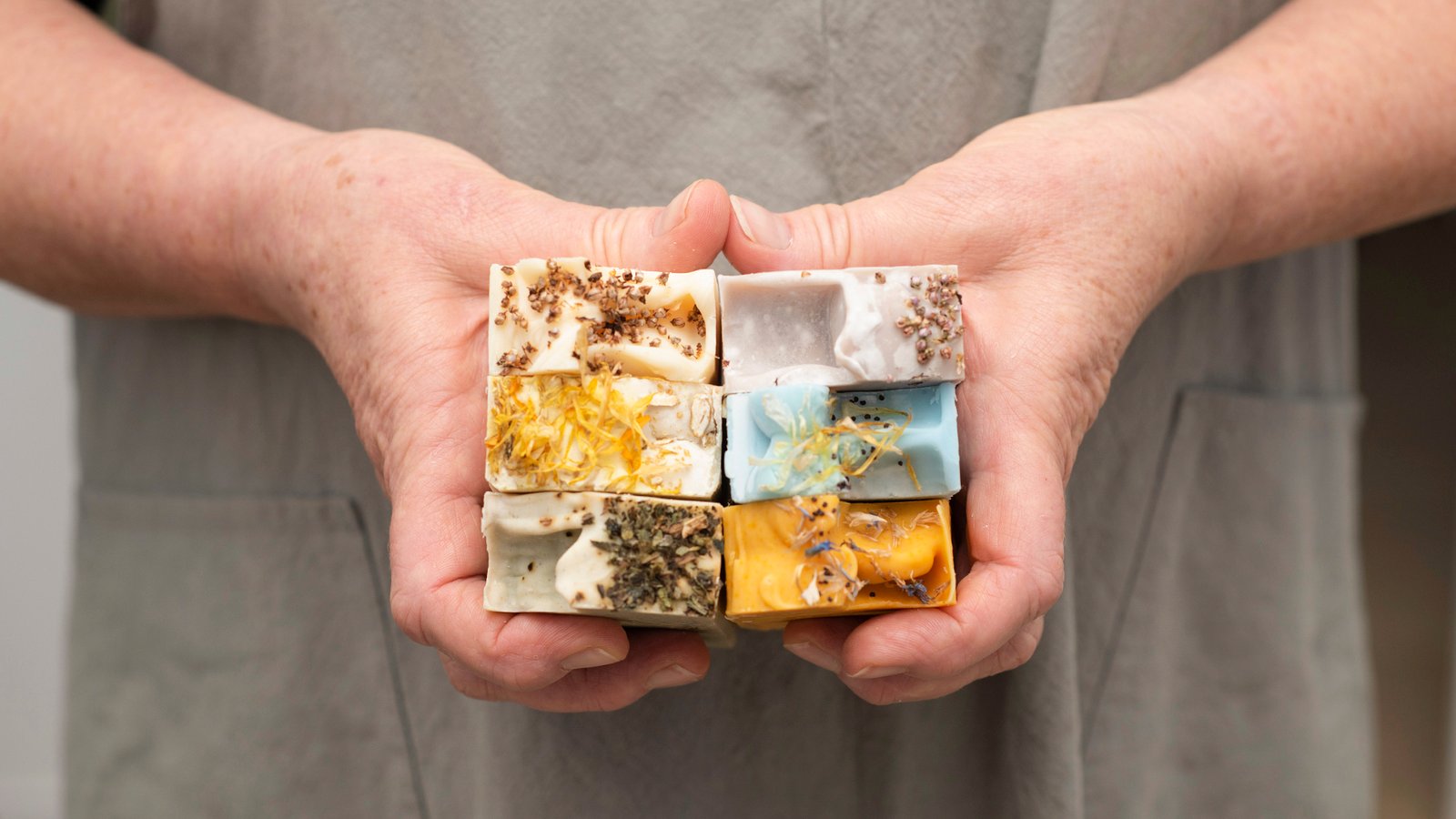
That said, it depends on the formula. Essential oils, botanicals, and exfoliants can all be lovely, but they are not right for everyone. Oatmeal can soothe. Herbal mint can feel fresh and clarifying. Goat milk can add creaminess. Yet the gentlest option for one person may not suit another. If your skin is highly reactive, plain and fragrance-light is often the safer place to start.
A good tallow bar should support comfort first. Everything else comes after that.
Why sourcing changes the quality of the bar
A premium soap starts long before the mould is filled. It starts with where the tallow comes from, how it is handled, and whether the maker treats sourcing as a headline or as real practice.
Tallow is a natural fit for a circular way of making skincare. It uses a valuable ingredient that might otherwise be overlooked, giving it purpose through careful formulation. When that tallow is sourced from regenerative and local farms, the story becomes stronger. There is less distance between field, maker, and customer. There is more accountability too.
For customers in Britain who care about ethical shopping, that matters. People want to know what they are bringing into their home and onto their skin. They want substance behind words like natural, local, and sustainable. Transparent sourcing, in-house rendering, and plastic-free packaging are not decorative extras. They are part of what makes a handmade bar worth choosing.
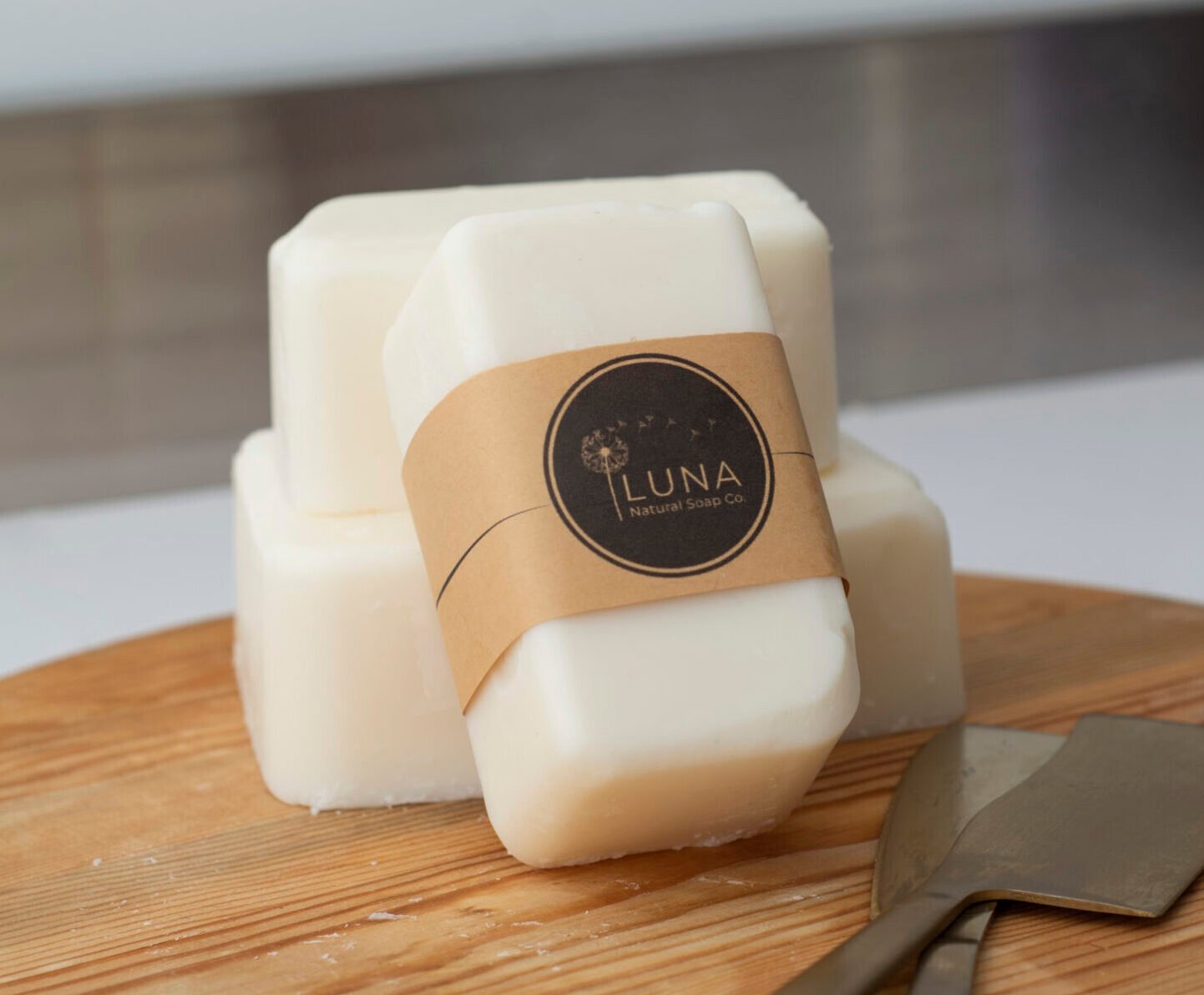
At Luna Natural Soap Co., this approach shapes the whole process, from slow-rendered tallow to small-batch production and low-waste packaging. It is craftsmanship with a clear standard behind it.
Handmade soap and the question of sustainability
Sustainability in skincare can become vague very quickly. Soap is one of the rare categories where the better option is often also the simpler one. A solid bar needs less packaging, lasts well when stored properly, and avoids the water-heavy formulas common in bottled products.
Tallow adds another layer to that conversation. For customers trying to reduce waste, it offers a practical use for a traditional ingredient within a circular economy model. That will not suit every shopper, and it is fair to say so. Some people prefer entirely plant-based products for personal or ethical reasons. Others are looking for the most skin-compatible option available and appreciate the logic of using every part responsibly.
There is no need to flatten that trade-off. The right choice depends on your values as well as your skin. What matters is honesty. If you want a long-lasting, effective, plastic-free bar with a strong traditional foundation, tallow soap is a compelling option.
How to choose the right organic tallow soap handmade bar
The best bar for you depends on what your skin is asking for. If it is dry, look for a simple, nourishing formula with minimal fragrance and ingredients known for softness, such as oatmeal or goat milk. If your skin is oily or congestion-prone, a bar with cleansing botanicals or a fresher herbal profile may suit better, provided it does not feel overly stripping.
Pay attention to curing and firmness as well. A properly cured handmade bar lasts longer, lathers more evenly, and performs more consistently in the shower or by the basin. Good soap should feel substantial in the hand, not soft or hurried.
Ingredient transparency is another useful signal. You should be able to understand what is in the bar and why it is there. Terms such as handmade, natural, or artisan only mean something when supported by a clear process and a thoughtful formula.
Small rituals, better skin, less fuss
Soap does not need to be complicated to be luxurious. In fact, the pleasure often comes from the opposite. A firm bar. A rich lather. A clean rinse. Skin that feels calm afterwards. That is the sort of everyday luxury people actually use.
For families, that practicality matters. One good bar can suit the bathroom, the basin, the travel bag, or the guest room. It can be a gentle daily staple or part of a gift that feels generous without excess. Handmade tallow soap fits naturally into that kind of life – considered, useful, and quietly beautiful.
If you have been disappointed by bars that looked natural but behaved harshly, this is where traditional soapmaking earns its place. Organic tallow soap handmade with care offers something refreshingly clear: less noise, more substance, and a kind of cleansing that leaves the skin feeling respected.
Sometimes the best skincare change is not a new step. It is choosing a better bar and letting your skin feel the difference.