


A wilted bag of spinach at the back of the fridge, bread gone stale before the weekend, peelings scraped straight into the bin. These small moments are where kitchen waste reduction begins. Not with perfection, and not with a cupboard full of clever containers, but with a few calmer habits that help good food, useful materials and household essentials go further.
For a lower-waste home, the aim is simple: buy with purpose, use what you have, and choose everyday products that do their job without leaving unnecessary packaging behind. It is practical care for your household, your budget and the resources that went into making each item.
Kitchen waste reduction starts before the shop
Most food waste is decided before a meal is cooked. A hopeful weekly shop can quickly become too much when plans change, children refuse a meal, or a busy week calls for something simpler. Shopping less often is not always the answer. Shopping with a little more honesty is.
Before adding fresh produce to the basket, check the fridge, freezer and cupboard. Plan for the meals you are likely to make, rather than the version of the week in which every dinner is cooked from scratch. Leave room for one flexible meal made from what needs using first. Soup, a frittata, a traybake or a pasta sauce can welcome many odds and ends.
It also helps to distinguish between food you use regularly and food you buy with good intentions. If fresh herbs often languish, choose a smaller bunch, freeze chopped herbs in a little water or oil, or grow a pot near the kitchen window. If salad leaves are frequently wasted, buy a smaller bag and add crunch with cabbage, carrots or radishes, which keep longer.
This is not about making your kitchen feel restricted. It is about choosing abundance that can actually be enjoyed.
Store food for its real life, not its label
Good storage protects the food you have already paid for. Keep fruit and vegetables visible enough to remember, but do not assume they all belong in the fridge. Tomatoes, bananas and whole onions usually fare better at room temperature, while leafy greens benefit from being kept cool and lightly protected from drying out.
Give the fridge a small reset once or twice a week. Move food with the shortest life to the front and place newer items behind it. This simple first-in, first-out habit is especially useful for yoghurt, cheese, cooked grains and opened jars.
Leftovers deserve a plan, too. Cool cooked food promptly, store it in a clean container and label it if your household tends to forget what was made when. A clear container can be useful, not because it looks tidy, but because it makes yesterday’s dinner easier to see and use. If you will not eat it within a few days, freeze it while it is still at its best.
Cook with more of what you buy
Some kitchen scraps are not scraps at all. Broccoli stalks can be sliced into stir-fries or grated into slaw. Cauliflower leaves roast beautifully. Soft carrots, celery and herbs can become stock, while the zest of an unwaxed lemon can lift cakes, dressings or a simple bowl of yoghurt.
Use judgement here. Not every peel, stem or outer leaf needs saving. If making stock from vegetable trimmings creates a freezer bag that sits untouched for six months, it is not a helpful habit. Choose the uses that fit the food you already cook and the time you genuinely have.
Portions matter just as much as peelings. Serve a little less at first, especially for children, and let everyone take more if they are still hungry. The result is often less waste and a more relaxed meal. When there are leftovers, treat them as an ingredient for tomorrow rather than a disappointing repeat of last night.
A roast chicken can become sandwiches, broth or a pie filling. Cooked vegetables can be folded into an omelette. Stale bread can be toasted, blended into breadcrumbs or baked into a savoury pudding. Familiar food becomes more appealing when it is given a new purpose.
Make the most of the food that is past perfect
Best-before dates are about quality, not an automatic instruction to throw food away. Use your senses where appropriate: look, smell and taste cautiously. Use-by dates are different and should be followed for safety, particularly with chilled foods.
Overripe bananas are made for baking. Slightly soft berries can be simmered into compote. Apples that have lost their crispness can be stewed with a little cinnamon. Even tired vegetables can often be revived in a soup or sauce, provided they are not mouldy or spoiled.
Keeping a designated “use first” spot in the fridge is one of the easiest ways to turn this into a household rhythm. It prevents perfectly good ingredients becoming invisible, and it makes the question of what to cook much easier at the end of a long day.
Reduce the waste around washing up
Kitchen waste is not only food. Disposable sponges, plastic washing-up bottles and products that run out quickly all add to the stream of materials leaving the home. The washing-up area is a good place to make a modest change that has a daily effect.
A firm solid dish soap can replace repeated plastic bottles while still providing the rich lather needed for everyday pans, plates and glasses. Pair it with a durable brush, wooden dish brush head or washable cloth, and allow everything to dry properly between uses. Items that dry well stay fresher for longer.
At Luna Natural Soap Co., the same principle of using materials with care guides both small-batch making and low-waste choices. A useful household product should feel considered, work hard and avoid creating a new problem once it has done its job.
Be realistic about hygiene. Reusable cloths and brushes are worthwhile only when they can be washed or replaced at the right time. A worn-out sponge does not become more sustainable by being kept beyond its useful life. Careful use and timely replacement are better than guilt.
Give packaging a second job where it makes sense
Glass jars can hold dry goods, leftovers or homemade dressings. Paper bags may be useful for food scraps before composting. Cardboard can be flattened for recycling or used beneath messy craft projects. These small reuses are helpful when they are immediate and practical.
Avoid turning your home into storage for packaging that might be useful one day. Keep a small, purposeful collection and recycle the rest correctly. Low-waste living should make your kitchen lighter, not fill it with clutter.
Compost what cannot be eaten
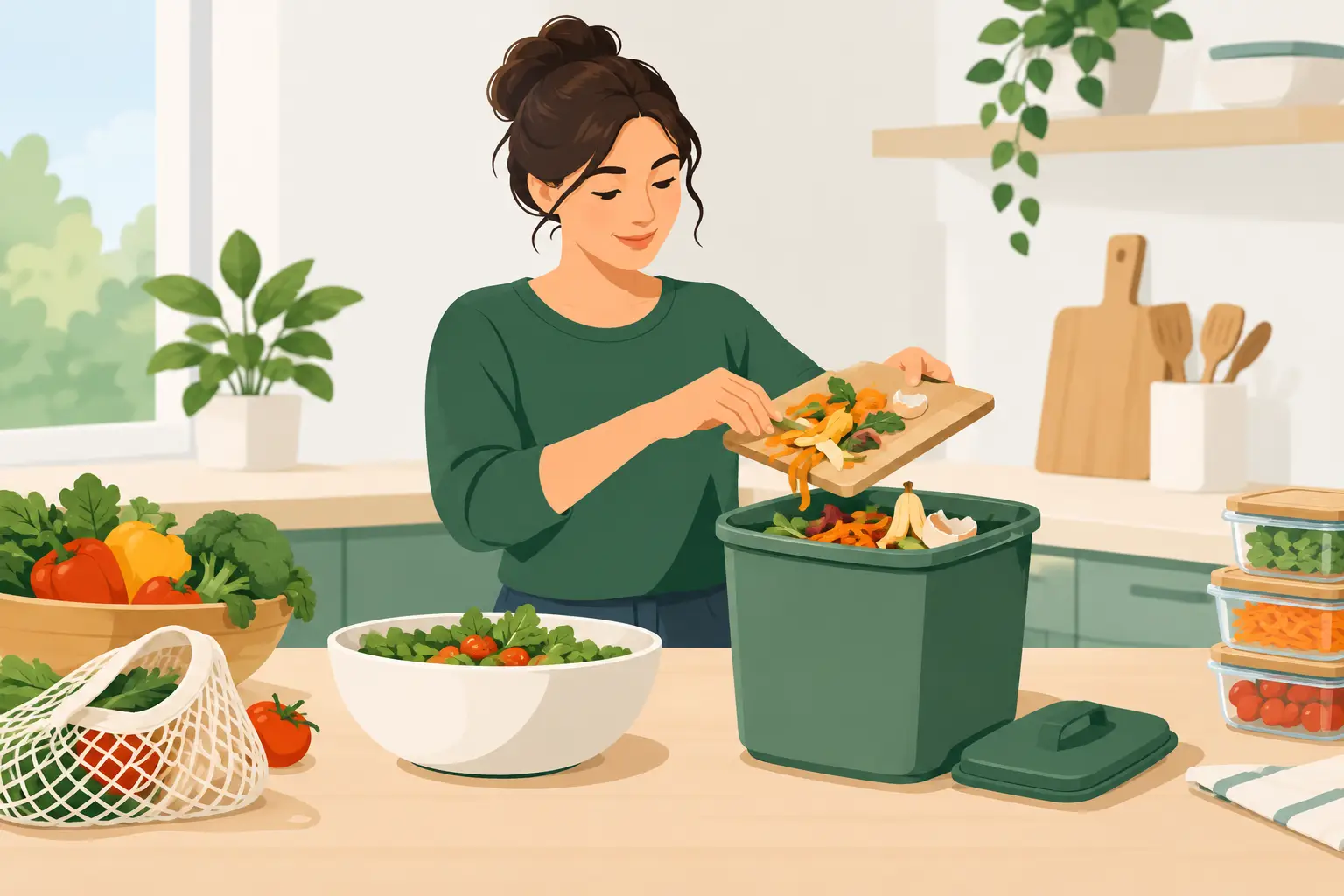
Even a thoughtful kitchen will have unavoidable scraps: tea leaves, coffee grounds, eggshells, onion skins and spoiled produce. Composting turns many of these leftovers into something useful for soil, whether you have a garden compost bin, a council food-waste collection or a shared scheme nearby.
Check local guidance before adding anything unfamiliar. Meat, dairy, cooked food and compostable packaging are accepted differently depending on the collection system. If you do not have outdoor space, a small countertop caddy lined and emptied regularly is often enough to make food-waste sorting manageable.
Composting is valuable, but it sits near the end of the process. Eating food is better than composting it; preventing excess from entering the kitchen is better still. That order keeps the focus where it belongs.
Build habits that can survive a busy week
The most effective kitchen waste reduction routines are almost invisible. Keep a running note of staples as they run low. Choose one evening to check what needs using. Freeze food before it becomes a rescue mission. Wash up with products made to last. None of this needs to be performed perfectly to make a difference.
Start with one change that removes a regular frustration. Perhaps it is a use-first shelf, perhaps it is cooking one flexible leftovers meal each week, or perhaps it is replacing a disposable washing-up product once it is finished. Let that habit settle before adding another.
A well-run kitchen is not one where nothing is ever discarded. It is one where each purchase is given attention, each useful material is treated with respect, and everyday choices leave a little less behind.