

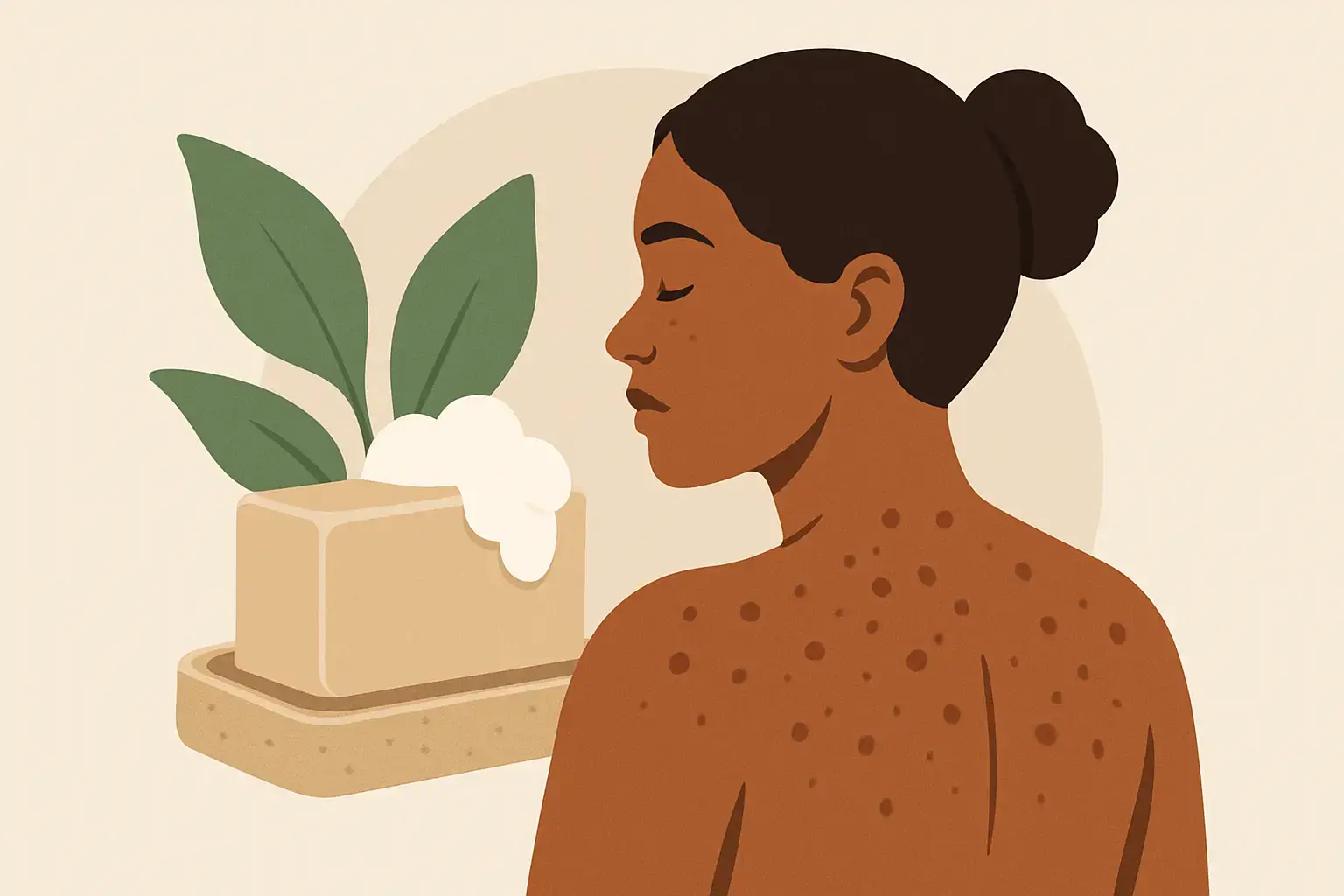
Body acne has a particular talent for showing up exactly where clothes rub – the back under a sports bra, the shoulders after a day in a rucksack, the chest under a snug jumper. It is rarely just “dirty skin”. More often, it is a mix of sweat, friction, occlusion, stress, hormones, and a cleanser that is either too harsh or too flimsy to shift what needs shifting.
If you are looking for a natural soap for body acne, the goal is simple: cleanse thoroughly without stripping your skin barrier. Clearer skin tends to follow when your barrier is calm, your pores are not being clogged by residue, and your routine is consistent enough to give your skin a fair chance.
Why body acne behaves differently to face acne
The skin on your back and chest is thicker, has more oil glands, and spends more time under fabric. That combination makes it easier for sweat and sebum to sit in place, especially if you are wearing synthetic gym kit or re-wearing a damp top.
Body breakouts are also more likely to be aggravated by friction (sometimes called acne mechanica). Even a good cleanser can struggle if your skin is constantly being rubbed, overheated, and re-coated in sweat and detergent residue.
Then there is the curveball: not every “spotty” body flare is classic acne. Some bumps are folliculitis (inflamed hair follicles), some are keratosis pilaris, and some are irritation from fragranced products. A natural soap can help, but the right choice depends on what is actually happening on your skin.
What “natural soap” really means – and why it matters
True soap is made by saponification: oils or fats are transformed with an alkali into soap and naturally occurring glycerin. Many “cleansing bars” on the market are not soap at all. They are detergent bars (often labelled syndet), designed to lather fast and rinse squeaky-clean.
That squeaky feel is the first trade-off. Detergents can be brilliant at removing oil, but they can also disrupt the barrier for people who are dry, sensitive, or eczema-prone – which is a common overlap with body acne. When the barrier is stressed, skin can produce more oil to compensate, inflammation rises, and spots can become more stubborn.
A well-made traditional soap can be gentler in real-world use, especially when it is formulated with a thoughtful superfat (a small amount of un-saponified fat left in the bar to cushion the cleanse) and allowed to cure properly for a firm bar and a creamy lather.
The cleanser problem: too harsh, too heavy, or just right
Body acne sits in an awkward middle ground. You need a cleanser that removes sweat, sunscreen, and body moisturiser without leaving a film that traps bacteria. But you also need to avoid stripping, because tight, dehydrated skin tends to inflame and mark.
This is why “natural” is not automatically better. Some natural soaps are overloaded with heavy butters or comedogenic oils that can feel gorgeous on dry limbs yet leave congested areas on the back feeling coated. Others are packed with essential oils that smell wonderful but can irritate reactive skin.
The sweet spot for many people is a simple bar with a stable, skin-compatible fat base, minimal fragrance, and a lather that rinses clean.
Tallow soap and body acne: a calm, barrier-first approach
Grass-fed tallow is an old-fashioned ingredient with a modern reason for coming back. Its fatty acid profile is naturally similar to what our skin barrier uses for structure and comfort. In practical terms, that can mean a cleanse that feels thorough but not “tight”.
Tallow also brings a dense, creamy lather that can lift sweat and daily grime effectively. For body acne, that matters because you want contact time and glide – enough slip to cleanse without scrubbing your skin raw.
There is a nuance here: if your body acne is very oily and highly congested, you may do better with a bar that is not overly superfatted and that rinses especially clean. If your body acne flares alongside dryness or eczema-prone patches, barrier support becomes the priority and tallow can be a sensible fit.
Ingredients that can help – and ones to treat with caution
For body acne, ingredients are only “good” if your skin tolerates them. Think in terms of function.
A gentle exfoliant can help when dead skin and sweat are contributing to blocked follicles. Oatmeal, for example, offers a soft, comforting polish and is often well-tolerated by sensitive skin. Clay can help with excess oil, but it can also be drying if used daily on already-dehydrated skin.
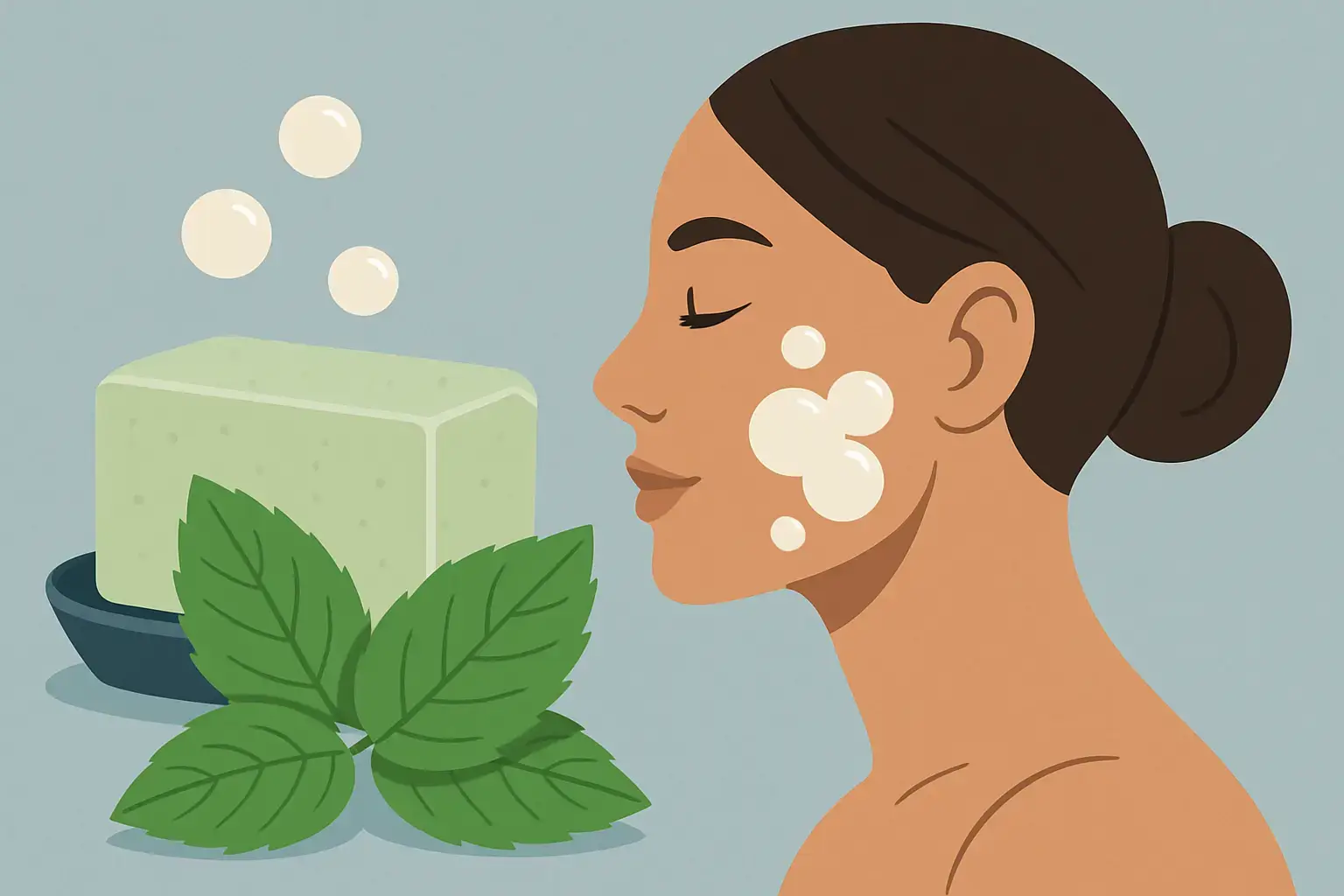
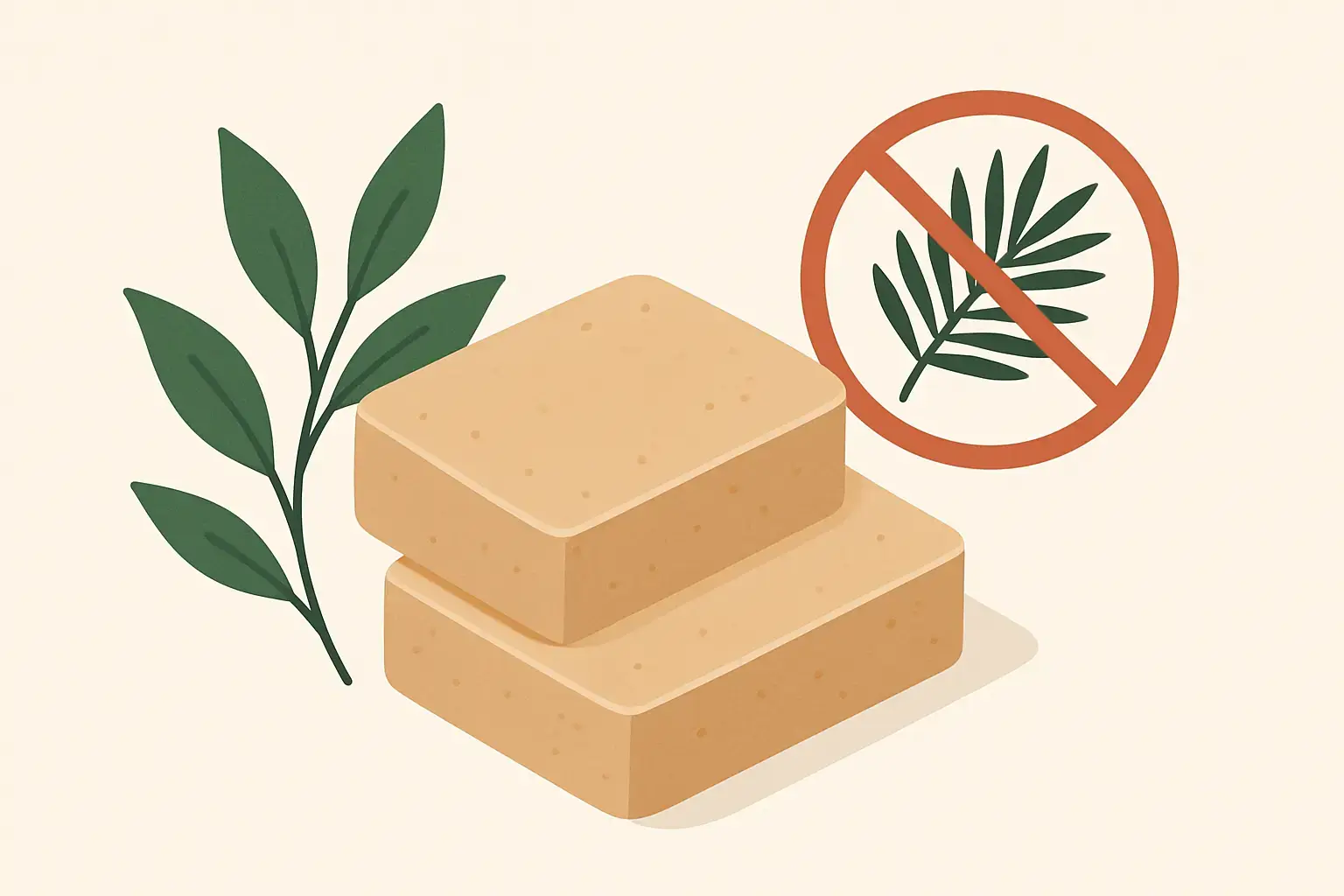
Herbal or minty bars can feel clarifying, but essential oils are not automatically acne-friendly. For some people, they are fine. For others, they trigger irritation that looks like acne and is just as frustrating.
If you are prone to congestion on your back, be wary of leaving rich leave-on products sitting there after you wash. Your soap choice matters, but so does what you put on afterwards.
How to use a natural soap for body acne (so it can actually work)
Most “soap didn’t work for me” stories are really “routine didn’t work for my skin”. Small changes make a big difference.
Start with timing. If you work out, wash as soon as you reasonably can. Letting sweat dry under fabric for hours is an easy way to keep a flare going.
Use warm water, not hot. Hot showers feel comforting, but they can increase redness and barrier disruption. Lather the bar in your hands or on a clean wash cloth, then apply the lather to acne-prone areas. You are aiming for gentle, even contact – not a scrub.
Rinse longer than you think you need to. Residue from conditioner, body oils, and even laundry detergent can sit on the upper back and shoulders. If you have long hair, wash and rinse your conditioner first, then cleanse your back and shoulders afterwards.
Dry with a clean towel and avoid heavy occlusive body creams on acne-prone zones. If you need moisturiser there, choose something simple and light, and apply it sparingly.
The hidden triggers that can undo a good cleanser
If you are doing everything “right” in the shower and still flaring, look outside the bathroom for a moment.
Fabric and friction matter. Tight straps, repetitive rubbing, and non-breathable materials can keep follicles inflamed. Swapping to softer, breathable fabrics for day-to-day wear and changing out of sweaty clothing quickly can be as helpful as changing your soap.
Laundry products matter too. Strongly fragranced detergent and fabric conditioner can leave residue that irritates the skin on your back. If your body acne is also itchy or patchy, this is worth testing.
And then there is consistency. A bar that supports your skin barrier will not do much if you alternate between it and a harsh shower gel when you are in a rush.
When natural soap is not enough (and what to do instead)
There are times when cleanser choice is only one piece of the puzzle.
If your body acne is cystic, painful, or leaving deep marks, you may need targeted actives or medical support. A wash containing an acne-active ingredient can be useful in short cycles, while keeping the rest of your routine barrier-friendly. If your bumps are itchy, uniform, and flare with heat, it could be folliculitis rather than classic acne – and that can require a different approach.
If you are pregnant, have eczema that is currently inflamed, or are under dermatology care, it is sensible to keep changes gentle and introduce one new product at a time. “Natural” does not mean risk-free. It means a different set of choices.
Choosing the right bar for your skin (without overthinking it)
For most people, the best starting point is a simple, traditionally made bar with minimal fragrance and a proven track record for sensitive skin. If you want a little extra help with texture, an oatmeal-based bar can be a comforting next step. If your skin is oily and resilient, a more cleansing bar can suit you – just watch for that tight, squeaky feeling that signals you may be over-stripping.
If you prefer to shop from a maker who is transparent about sourcing and process, Luna Natural Soap Co. is built around small-batch, cold-process tallow soapmaking with a clear focus on gentle cleansing, plastic-free packaging, and real-skin comfort.
The best test is boring but effective: choose one bar, use it consistently for a few weeks, keep everything else steady, and notice whether your skin feels calmer between showers. Less sting, less tightness, fewer angry flare-ups after friction – these are the quiet signs you are on the right track.
Body acne is rarely solved by a single hero product. But when your daily cleanse stops picking fights with your skin, you give your body the conditions it needs to settle, heal, and breathe again – and that is often where clearer skin starts.